
Why
Under the National Disability Insurance Scheme (NDIS), the Quality and Safeguards Commission is responsible for overseeing service quality, safeguarding and incident management. While reporting requirements are clearly defined, evidence from system‑level reviews suggest that reporting can be inconsistent and challenging in practice.
Allied health and behaviour support practitioners frequently provide services within the NDIS context. Despite their central role in identifying risks and harms, there is very little research capturing these practitioners’ perspectives.
How do allied health and behaviour support practitioners recognise, respond to and contribute to the reporting of NDIS incidents under the NDIS Quality and Safeguards Commission framework?
The research
We conducted an anonymous national online survey of allied health professionals and behaviour support practitioners who provide services to NDIS participants.
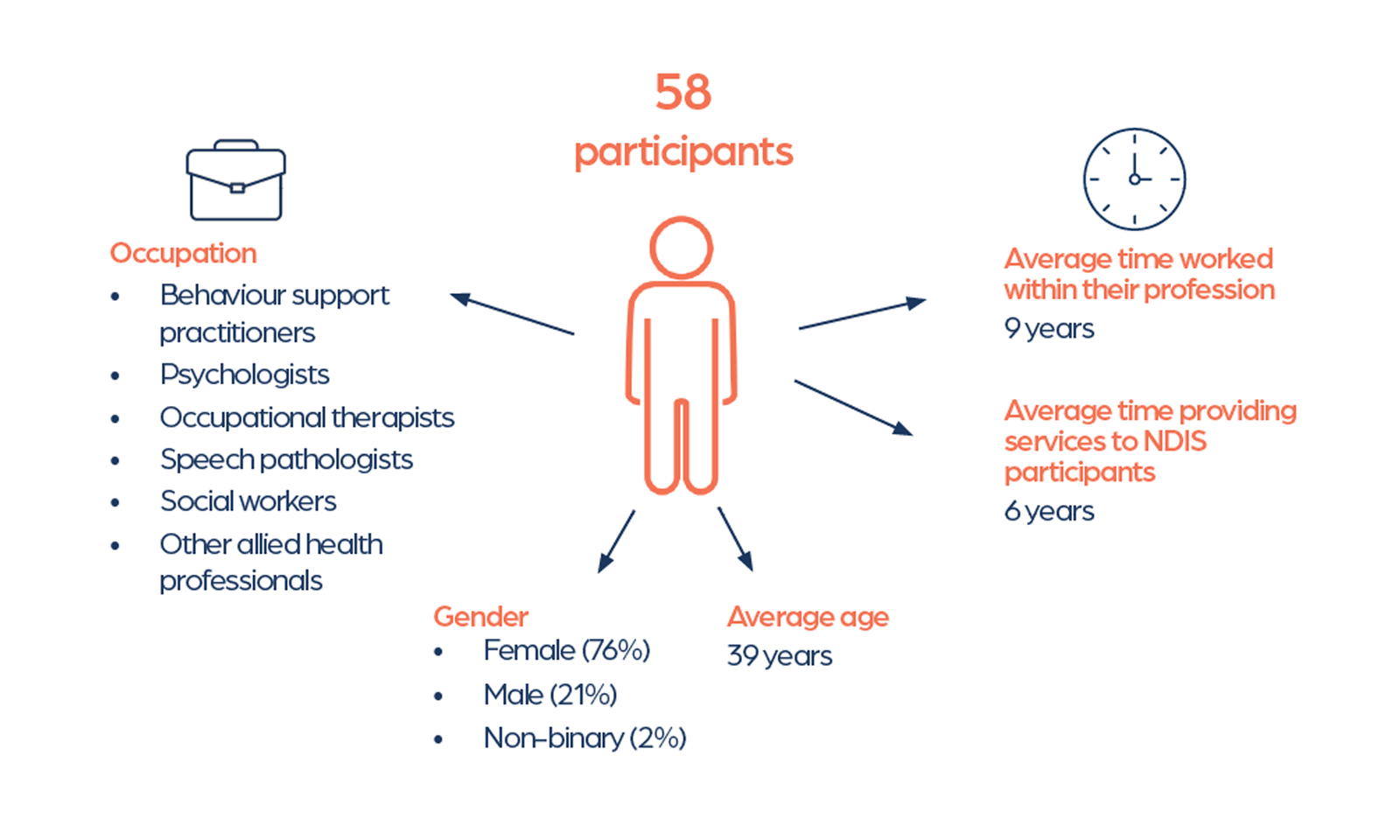
The survey examined:
- Knowledge of NDIS reportable incident requirements
- Confidence and clarity regarding reporting responsibilities
- Previous reporting experiences
- Barriers and enablers to reporting
- Suggestions for improving safeguarding practice
What we learnt
Practitioners were confident, but important knowledge gaps remained.

95% were confident recognising reportable incidents

Knowledge was moderate (mean 5.45/8)

One-third had wanted to report but were unsure how to proceed

Only 43% were very clear about their reporting responsibilities
50% had been unsure whether they were responsible for reporting
Common barriers
- Limited knowledge and training
- Burdensome reporting systems
- Uncertainty regarding responsibilities
- Concerns about consequences of reporting
- Limited organisational guidance
- Frustration with regulatory processes
Common enablers
- Effective supervision
- Clear reporting pathways
- Decision-support tools
- User-friendly reporting systems
- Ongoing capability development

Making a difference
This project addresses a gap in knowledge around practitioners' perspectives of incident reporting. Recommendations from the findings of the study:
- Training should place greater emphasis on applying legislative requirements through realistic case examples and discussion rather than knowledge of legislation alone.
- Providers should ensure practitioners have clear reporting pathways, decision-support tools, routine supervision and reporting systems that are practical and easy to use.
- Overall, strengthening safeguarding requires a systems approach that combines knowledgeable practitioners with supportive organisational processes and effective reporting infrastructure.
Research team
- Dr Chris Edwards: Adjunct Research Fellow (Griffith University) and Research Fellow (ARCAP)
- Dr Abigail Love: Research Fellow (ARCAP)
- Dr Ru Ying Cai: Research Fellow (ARCAP)
- Dr Vicki Gibbs: Head of Research (ARCAP)
- Jessica Degrassi: PBS and Safeguarding Manager (Aspect)
- Dr Jeffrey Chan: Consultant, Adjunct Professor (University of Queensland)
Started
2026
Ends
2026
Funding
Aspect (Autism Spectrum Australia)
Ethics approval
Griffith University Ref No: 2026/0039