
Why
Autistic Community Experiences of Services and Supports in Australia (ACCESS Australia) is a research project exploring how accessible everyday services and places are for Autistic people in Australia.
Many Autistic people and families say they face challenges when using services such as healthcare, transport, employment services, shops, restaurants, education and community activities. At the moment, there is no national information that shows how common these challenges are or how they affect wellbeing.
By hearing directly from Autistic adults and from parents or caregivers of Autistic people, this study will help show what is working well and where changes are needed. The findings will help guide future improvements so services and environments across Australia can be more accessible and inclusive for Autistic people of all ages.
How accessible are everyday services and places for Autistic people in Australia?
The research
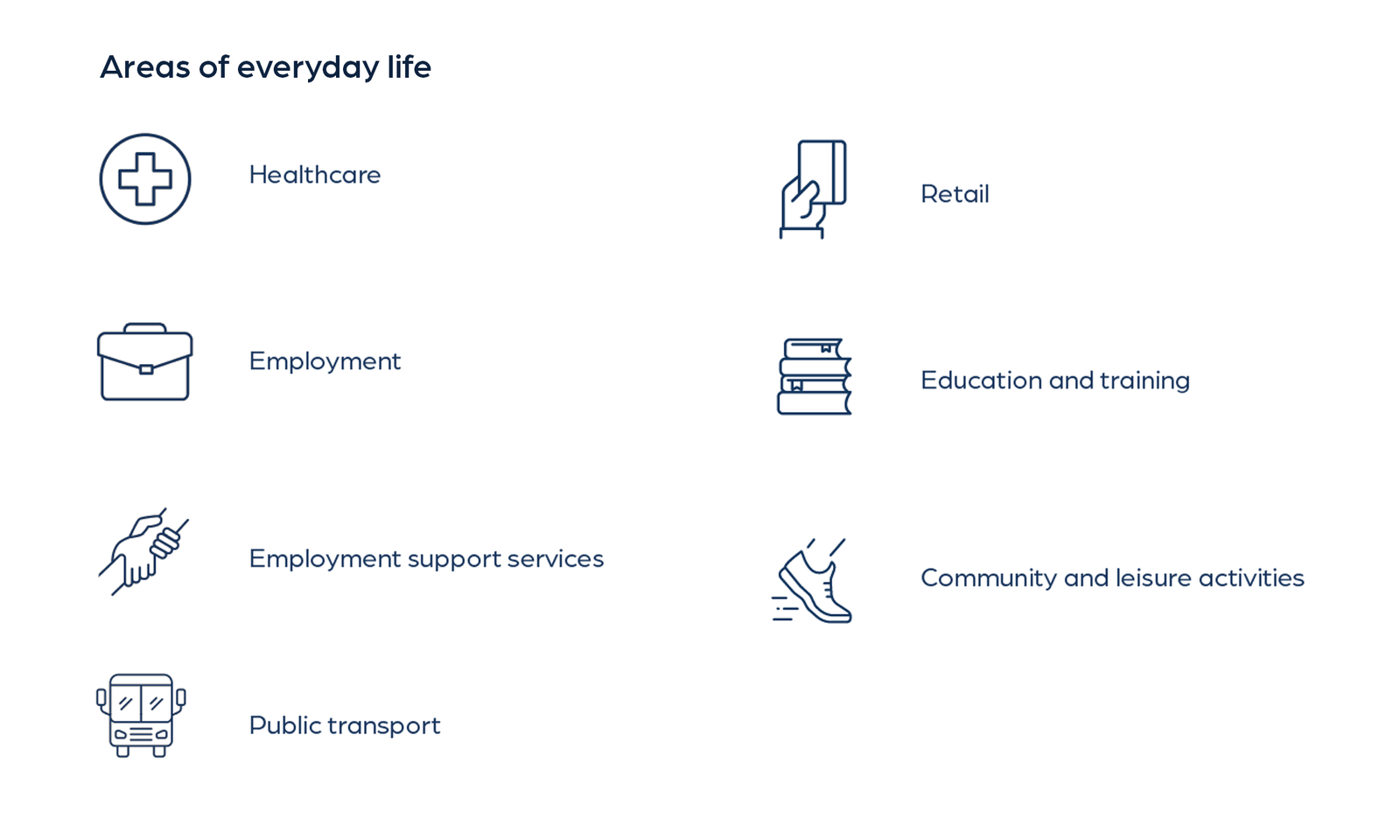
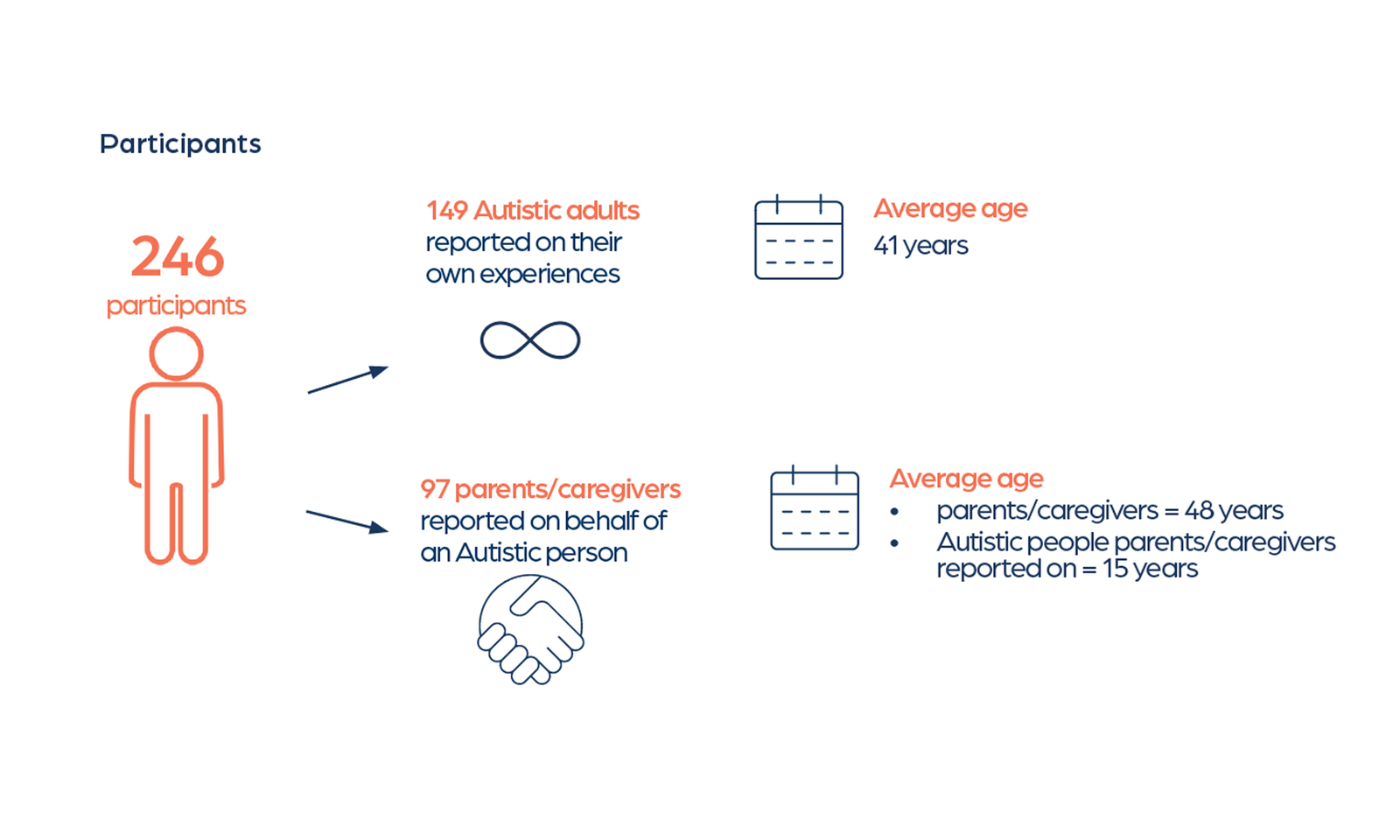
Aspect led a national online survey with Autistic adults and parents or caregivers in Australia. The survey asked about seven areas of everyday life. For each area, participants were asked about service use, accessibility barriers and the impact of those barriers on their wellbeing.
What we learnt
Accessibility difficulties were common across all seven areas of everyday life included in the survey.
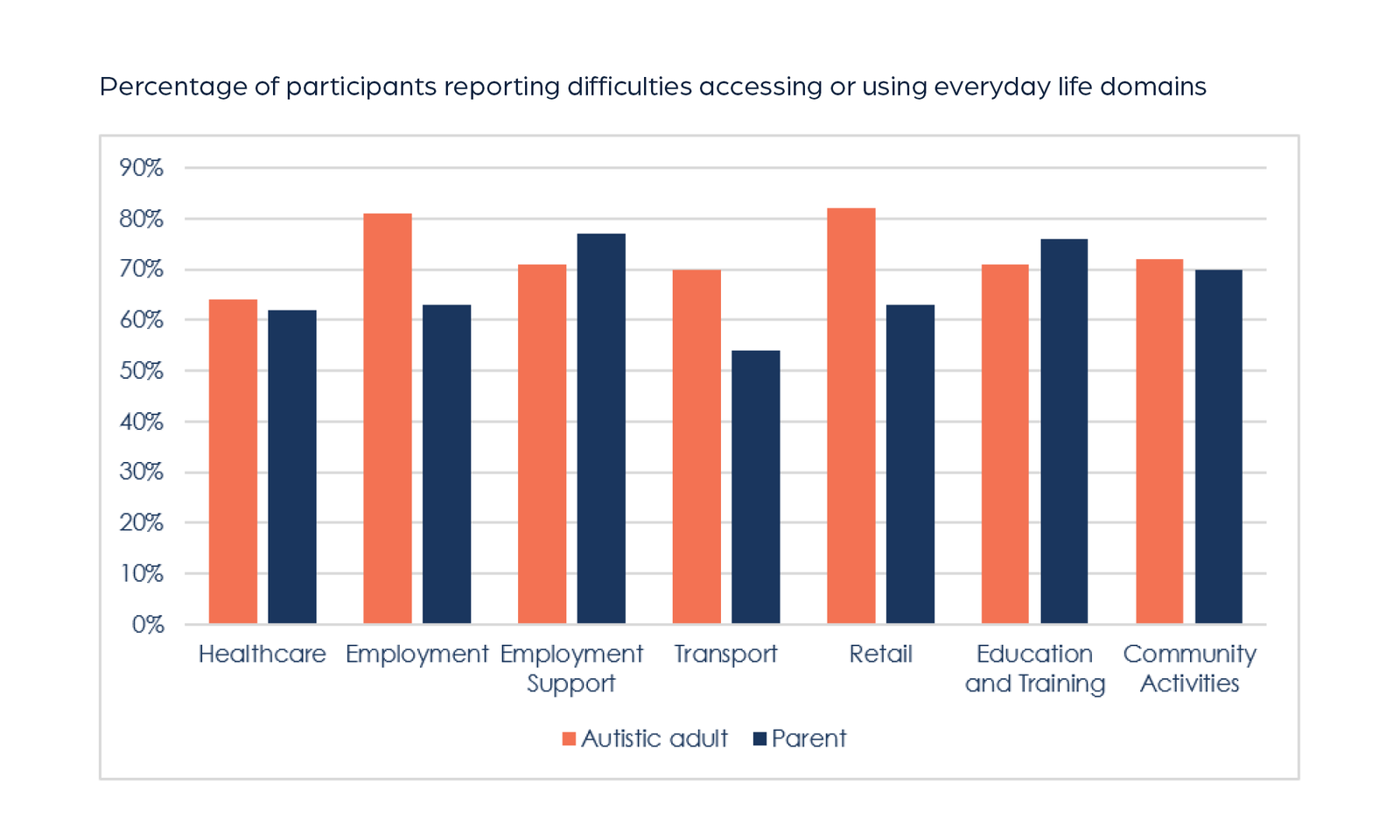
Commonly endorsed barriers across all areas of everyday life.

Sensory environment

Unpredictable or inconsistent processes

Communication or information access

Staff attitudes or understanding

Wait times or limited availability

Cost or affordability
Participants also told us that these barriers were often recurring, rather than rare or one-off experiences. Importantly, these difficulties were not only inconvenient. Across all domains, many participants said accessibility barriers had a ‘moderate’ or ‘large’ impact on wellbeing. This suggests that accessibility affects not only whether people can enter or use a service, but also how much energy, confidence, and support they have left for everyday life.
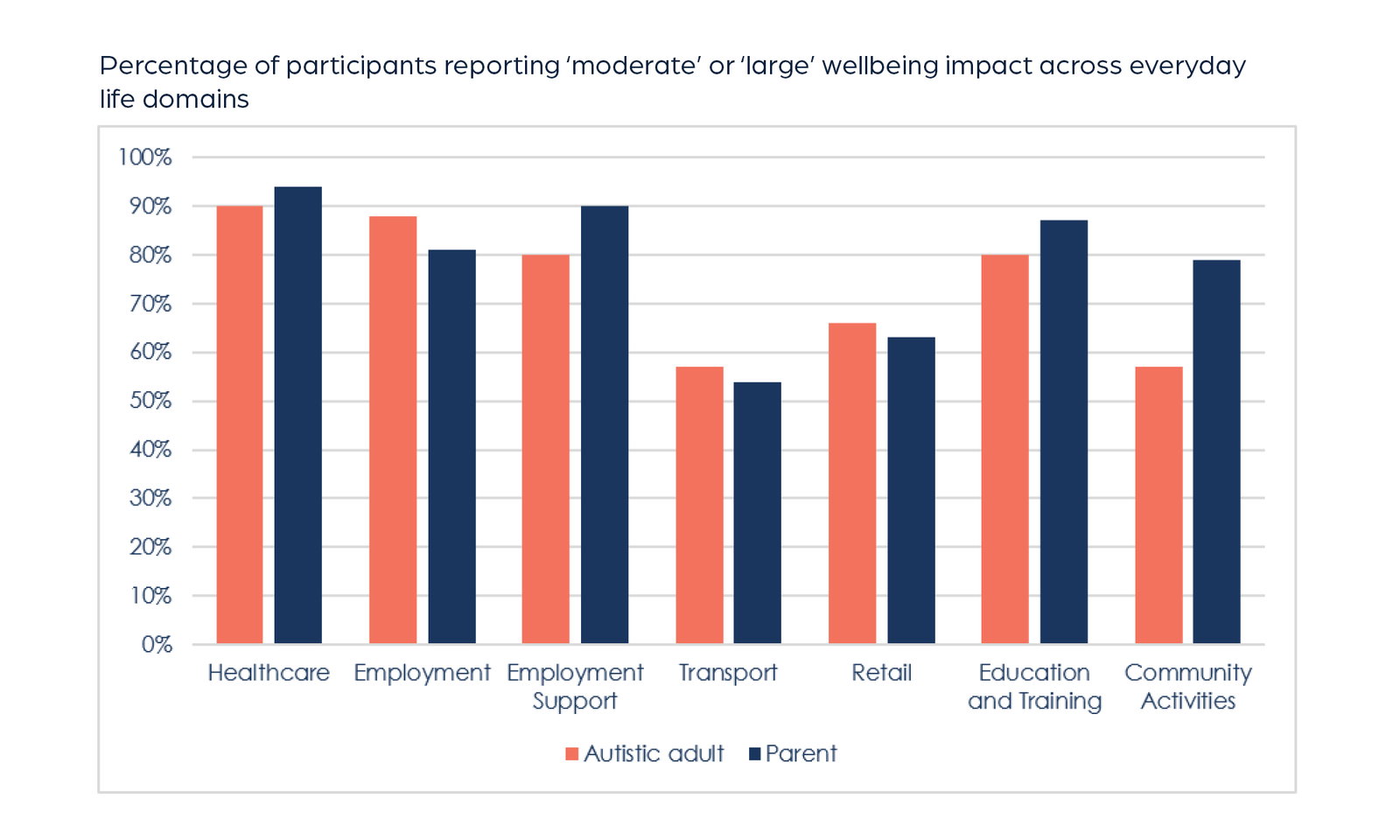
The survey results provide a broad picture of accessibility difficulties across everyday life. Participants’ written responses helped explain what these difficulties looked and felt like in practice, and why they mattered for wellbeing and participation. Based on this feedback, four themes were deduced.


Theme 1
Sensory environments were “actively hostile to Autistic needs”

Theme 2
Services were difficult to reach and difficult to adapt

Theme 3
Interpersonal understanding shaped accessibility
Theme 4
Repeated inaccessibility narrowed everyday life

Publication
Edwards, C., Love, A., Cai, R.Y., Magiati, I., Alvares, G., & Gibbs, V. (2026). “We could get out more often if accessibility was improved”: Inaccessible everyday environments, participation, and wellbeing among autistic people and families in Australia. Pre-print.
Media
SBS News Podcast: What autistic Australians want businesses and services to know about accessibility (17 September 2026).
Making a difference
The findings provide strong evidence for the need for autism-friendly practice across everyday services and places. Accessibility matters wherever Autistic people and families live, learn, work, travel, shop, receive care, and take part in community life.
Aspect Autism Friendly works with organisations to make everyday environments more accessible and inclusive. This research strengthens the case for that work by showing that practical changes in individual settings are important, but are most powerful when they are part of a broader commitment to accessibility:
- Make accessibility part of everyday service design
- Create changes that are practical and context-specific
- Reduce the work required to participate
- Work together toward a more autism-friendly Australia
Research team
- Dr Chris Edwards: Griffith University and ARCAP
- Dr Abigail Love: ARCAP
- Dr Ru Ying Cai: ARCAP
- Dr Vicki Gibbs: ARCAP
- A/Prof Gail Alvares: The Kids Research Institute Australia
- A/Prof Iliana Magiati: University of Western Australia
Started
2026
Ends
2026
Funding
Aspect (Autism Spectrum Australia)
Ethics approval
Griffith University Ref No: 2025/950