The pressure to have a plan after school
When I think back to my transition from high school into adulthood, I can still feel the weight of pressure and expectation like cement in my stomach.
What should I do next? Where is my life heading? Why can’t I focus on my exams? Why does everyone else seem to have a plan and who on earth even am I?
The truth was, I had absolutely no idea.
I desperately wanted to fit in, but social relationships could feel baffling and exhausting. Studying was incredibly difficult. I struggled to begin assignments or focus on things my brain wasn’t interested in, and I thought I was lazy or somehow broken. I masked heavily, went to university mostly because I felt I was supposed to, and found general adulting much harder than those around me seemed to find it.
Without understanding my neurodivergence, I interpreted these struggles as personal failures. Looking back now, I can see that I was trying desperately to function in a world that wasn’t always set up for the way I moved through it.

The need to be seen
My mind felt like a huge ball of different-coloured wool, impossibly tangled together. I needed someone alongside me who could listen without judgement, validate my experience, and help me gently loosen one knot at a time.
This is where a resource like Side by Side could have made a real difference.
An Autistic Peer Navigator might have helped me untangle what I thought I should do from what actually mattered to me. We could have explored why studying felt so difficult, what supported the way my brain worked and whether university was truly the right path for me. We might have talked about my strengths, interests, worries and support needs, without expecting me to have a complete plan.
Most importantly, I could have been reminded that I didn’t need to work out my whole future at once. We could have simply found one manageable next step for me to try, together.
That is what makes Side by Side so meaningful to me now.
Introducing Side by Side
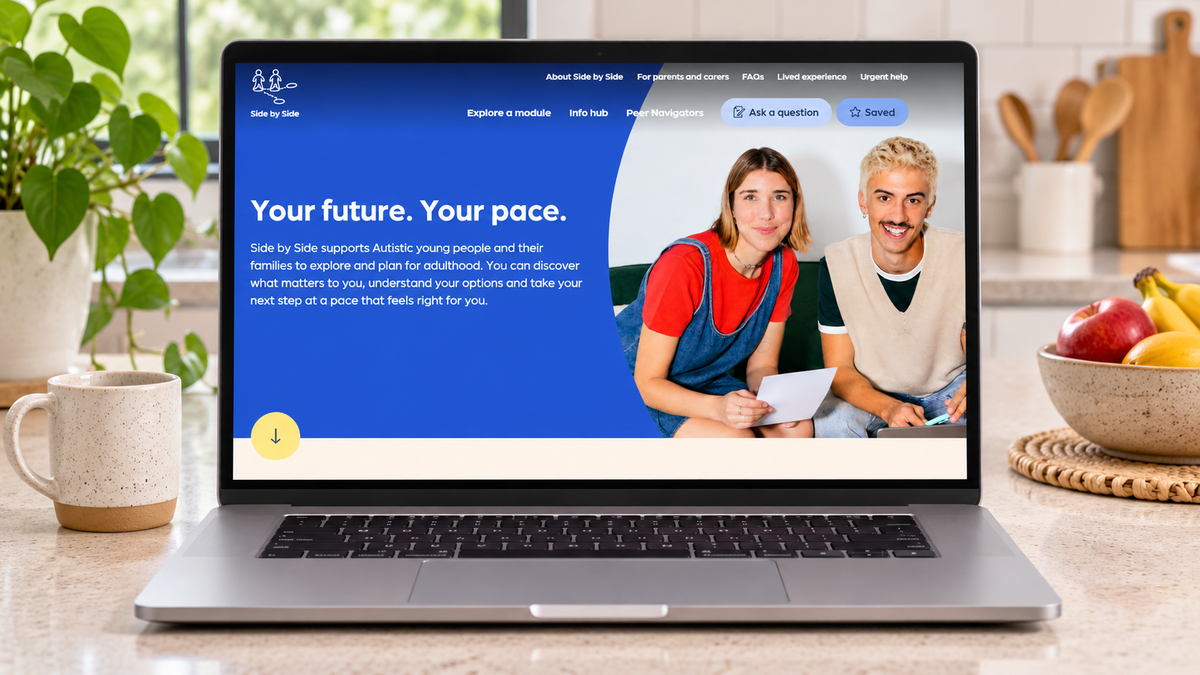
Side by Side offers Autistic young people and their families a place to pause, explore options and make sense of information at their own pace. Through practical online resources, learning modules and 'A Getting Started Chat' with Autistic Peer Navigators, people can explore areas such as education, employment, independent living, relationships and wellbeing.
Side by Side is not about ‘fixing’ anyone or telling people which path to follow. It is about listening, sharing lived experience and helping each person identify what may work for them best.
What I’d tell my younger self
If I could give my younger self a cuddle, I’d open my arms wide and say:
Caz, it’s okay that you don’t know. You don’t have to have everything figured out!
Ask for help. Rest when you need to. Stay curious about your strengths, interests, and what works best for your brain. Your path doesn’t have to look like anyone else’s.
I didn’t have someone to tell me that then. Through Side by Side, I now have the privilege of sharing this message with others and, hopefully, helping them feel seen too.
If you are an Autistic young person feeling unsure about what comes next, or a parent or carer supporting someone through this transition, you don't need to wait until you have a clear goal or plan. You can connect with Side by Side today, with people who have been there too, and start exactly where you are.
Explore Side by Side
About the author
Caz Burke (she/her) is an Autistic Peer Navigator with Aspect’s Side By Side program. With three children and a background in psychology, youth counselling and community services, Caz is passionate about using her lived experience to work alongside young people in a collaborative, strengths-based way to explore opportunities, build confidence and support meaningful next steps.
Frequently asked questions
How can Autistic young people prepare for adulthood?
Preparing for adulthood can involve exploring areas such as further education, employment, independent living, relationships and wellbeing. It can help to think about your strengths, interests, needs and preferences rather than feeling you have to follow the same path as other people.
What can help an Autistic young person who feels unsure about life after school?
Having space to explore options without pressure to make an immediate decision can help. Information, practical resources and conversations with people who understand Autistic experiences can help young people work out what matters to them and what they might like to try next.
What is Side by Side?
Side by Side is Aspect’s free online resource for Autistic young people and the people who support them as they explore options for adult life. It includes practical online resources, learning modules and a Getting Started Chat with an Autistic Peer Navigator.
What does an Autistic Peer Navigator do?
An Autistic Peer Navigator can help you find and explore information and resources relevant to what you want to know about adult life. They bring their own lived experience of being Autistic and can help you identify useful next steps without telling you which path you should take.
Do I need to know what I want before using Side by Side?
No. You don’t need to have a clear goal or plan. You can start with the questions you have now, explore your options and work out what your next step might be.
Will Side by Side be evaluated?
Yes, Side by Side will be evaluated by the Aspect Research Centre for Autism Practice (ARCAP) to assess the effectiveness, relevance and impact of the online resource. Find out more about this research.
How is Side by Side funded?
Side by Side is supported by funding from the Australian Government through the Reform of the Information, Linkages and Capacity Building (ILC) Program, Individual and Family Capacity Building 2025–26 grant opportunity, administered by the Department of Health, Disability and Ageing.