
A healthcare service may be nearby. A workplace may have an inclusion policy. A community event may be open to everyone.
But does that mean an Autistic person can understand what to expect, manage the environment, communicate their needs and participate without being overwhelmed or judged?
New research led by the Aspect Research Centre for Autism Practice examined how Autistic people and families experience services and supports across seven areas of everyday life.
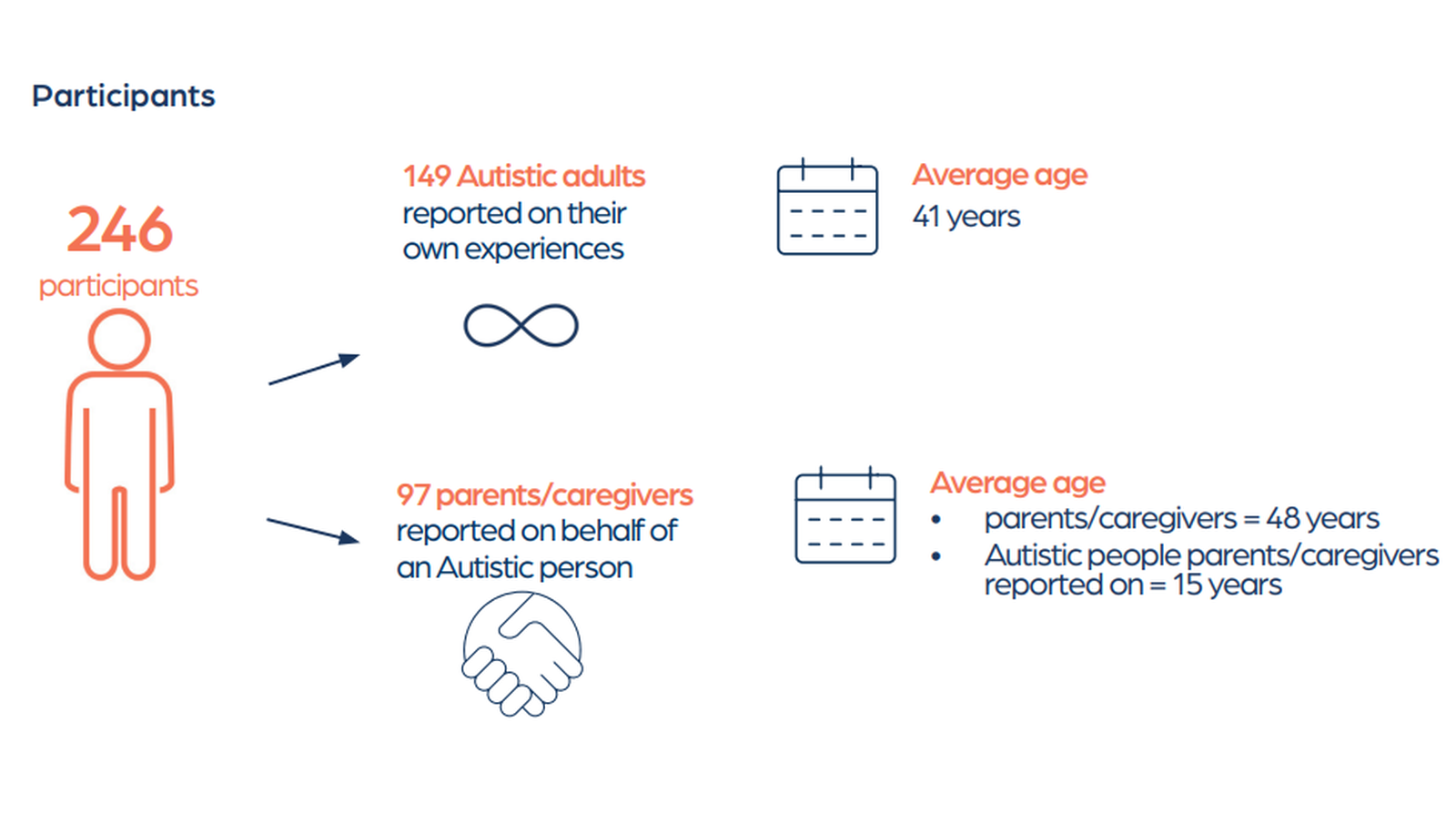
The national survey involved 246 participants, including 149 Autistic adults and 97 parents or caregivers. We spoke with researchers Dr Vicki Gibbs and Dr Chris Edwards about what the findings reveal and why availability alone does not guarantee accessibility.
What did the study examine?
Vicki: We wanted to understand accessibility across everyday life, rather than looking at only one setting. The survey explored healthcare, employment, employment support services, public transport, retail, education and training, and community and leisure activities.
Participants told us whether they had experienced accessibility difficulties, what kinds of difficulties they encountered, how often they occurred and how they perceived these experiences to have affected their wellbeing.
Who participated?
What were the most common barriers?
Vicki: Sensory environments were the most commonly endorsed barrier overall. Participants described places that were too noisy, brightly lit or crowded. These conditions could determine whether someone was able to enter a space, remain there or return in the future.
Unpredictable processes, communication barriers and staff attitudes were also commonly identified.

Sensory environment

Unpredictable or inconsistent processes

Communication or information access
Staff attitudes or understanding

Wait times or limited availability

Cost or affordability
How important is staff understanding?
Chris: It can change the entire experience. Participants felt safer and better supported when staff listened, explained things clearly, allowed flexibility and responded without judgement.
As one Autistic participant told us:
“They still care about my opinions, they just understand I need to communicate them differently. It helps when people try like that.”
Accessibility is not only about the physical or sensory environment. It is also shaped by how people communicate, respond and adapt.
Were these difficulties isolated experiences?
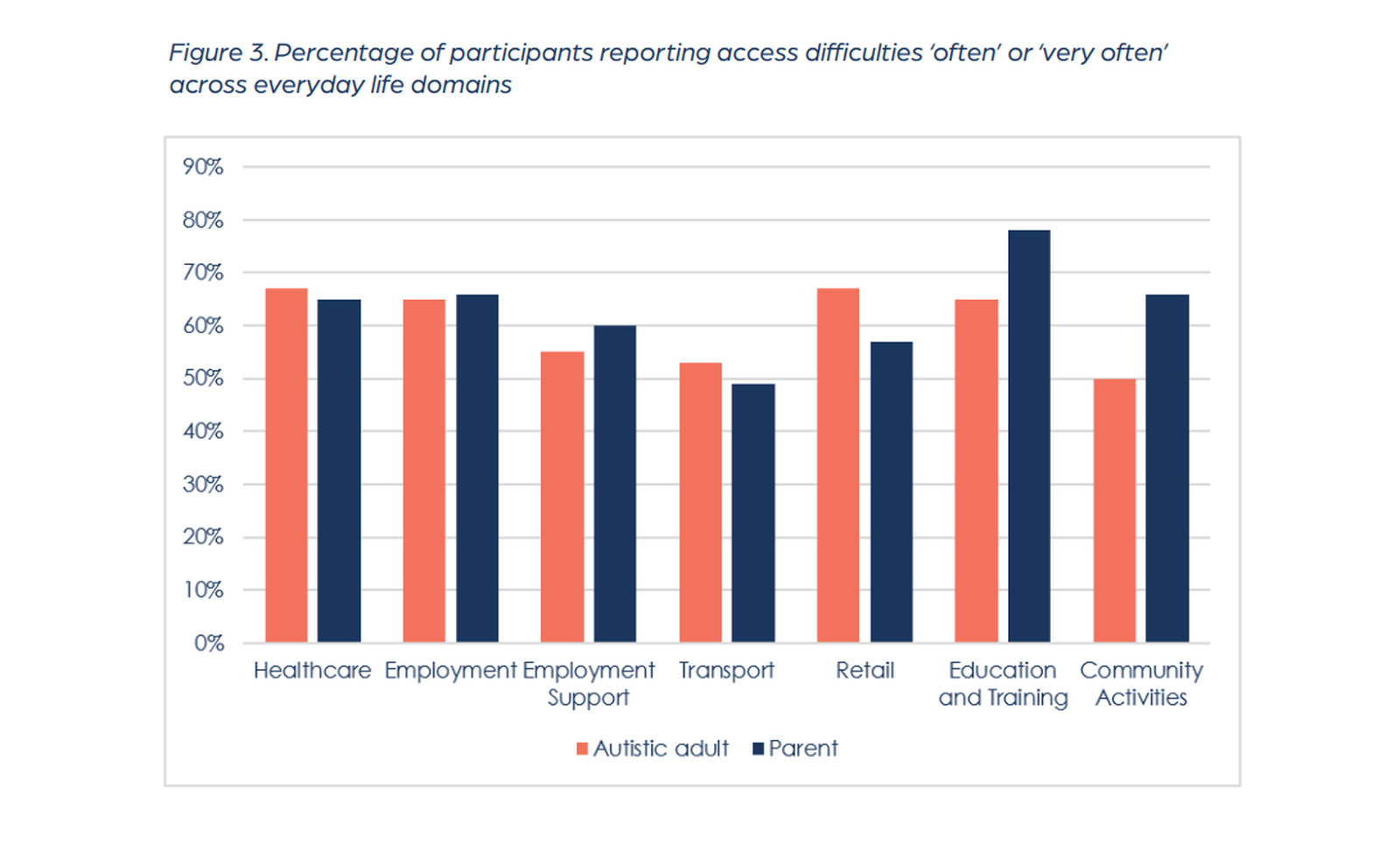
Vicki: For many participants, no. Accessibility difficulties occurred repeatedly and across more than one area of life. In healthcare, employment, retail, and education and training settings, more than half of those who experienced difficulties said they encountered them often or very often.
Over time, repeated inaccessibility could narrow everyday life. Participants described avoiding places, delaying or missing appointments, limiting activities, and needing hours or sometimes days to recover from inaccessible environments.
One Autistic adult said they had:
“withdrawn from a lot of things to focus on leaving enough sensory energy for essential tasks.”
What wellbeing impacts did participants report?
Chris: Participants made it clear that these barriers were not simply inconvenient.
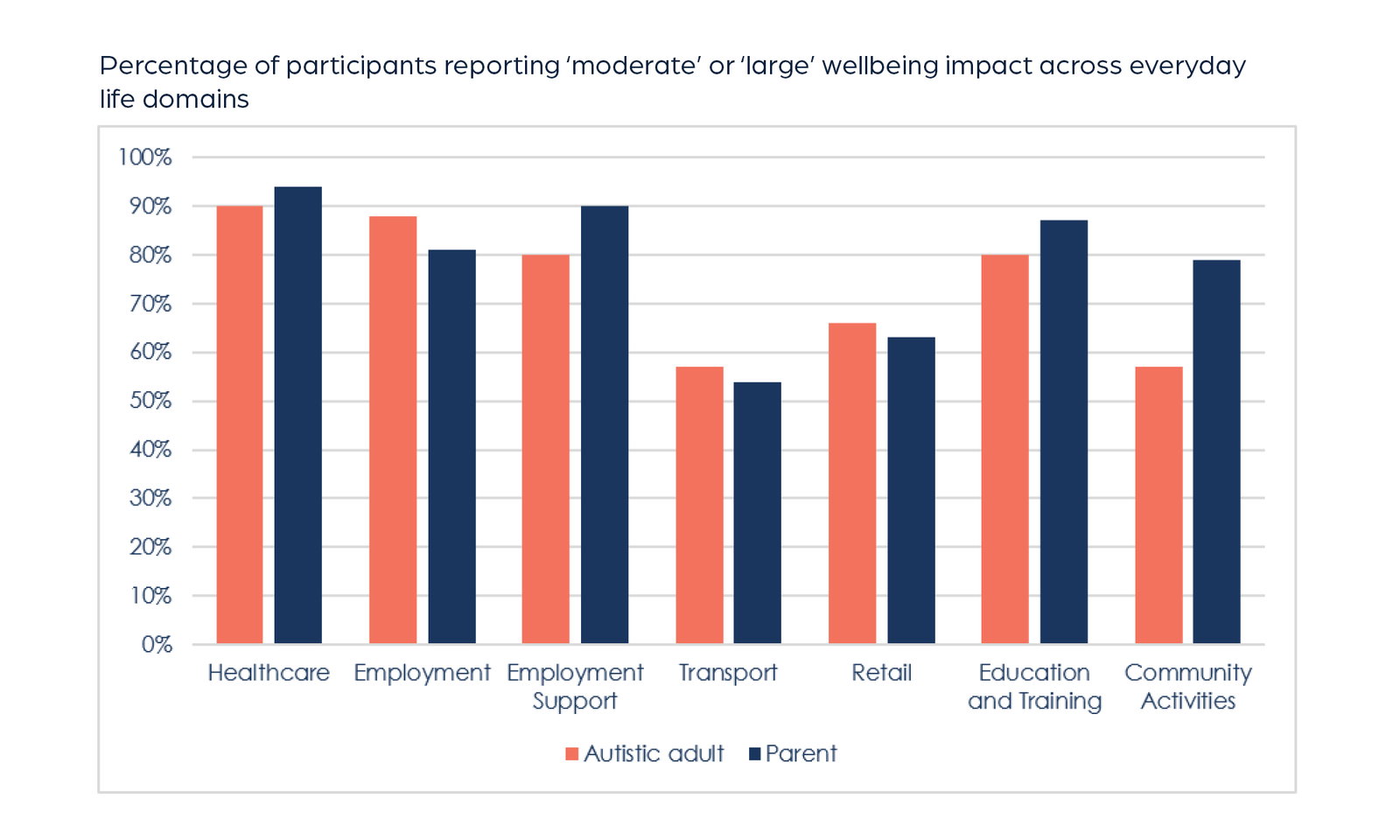
Across all seven areas, more than half of those who experienced accessibility difficulties reported a moderate or large impact on wellbeing. The impact was particularly prominent in healthcare, employment, employment support, and education and training settings.
Accessibility can influence a person’s confidence, energy and willingness to return to certain environments. It can also place a significant burden on Autistic people and families to plan ahead, explain their needs and recover afterwards.
What can organisations do differently?
Vicki: There is no single adjustment that will make every environment accessible, but common principles can make a meaningful difference:
- provide clear information about what to expect
- make processes more predictable
- offer quieter spaces or calmer appointment times
- allow flexibility in communication and service delivery
- ensure staff listen and respond respectfully
- involve Autistic people in designing and reviewing services.
The aim should be to build accessibility into the experience from the beginning, rather than treating it as an optional extra.
What is the broader message?
Chris: Autistic people and families should not have to work so hard to participate in everyday life.
The challenge for organisations is not simply to open the door, but to ensure people can enter, participate, remain and return without being overwhelmed, judged or left to carry the burden of access themselves.
This article draws on findings from the Autistic Community Experiences of Services and Supports in Australia study. The manuscript is currently under peer review. A preprint, which has not yet completed peer review, is publicly available on PsyArXiv