
A noisy and unpredictable train journey. Unclear communication at work. Bright lights and crowds at the supermarket. A healthcare service that doesn't understand your needs. A new national study shows just how widespread these barriers are and the toll they take on Autistic people and their famailies.
Accessibility in Australia snapshot
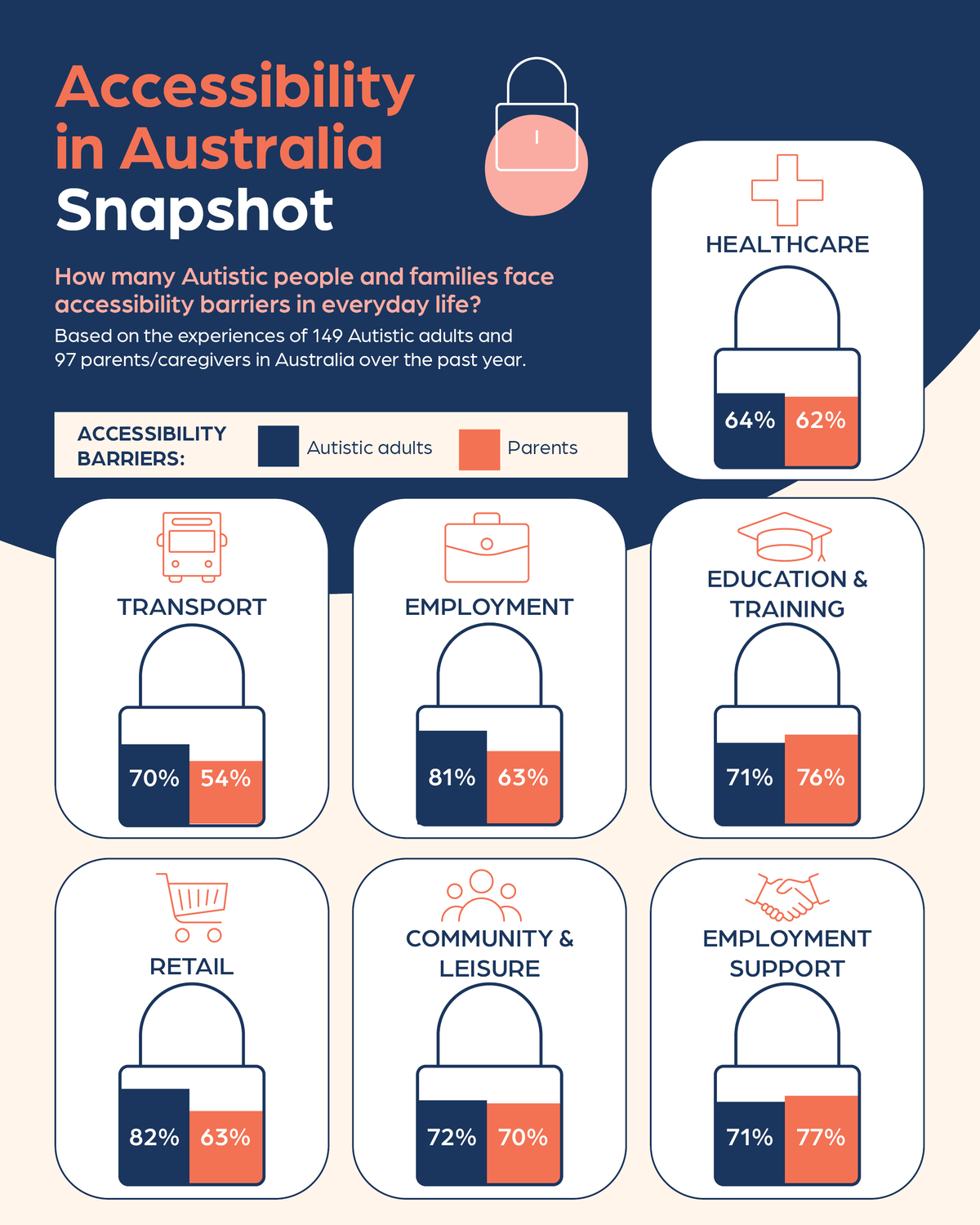
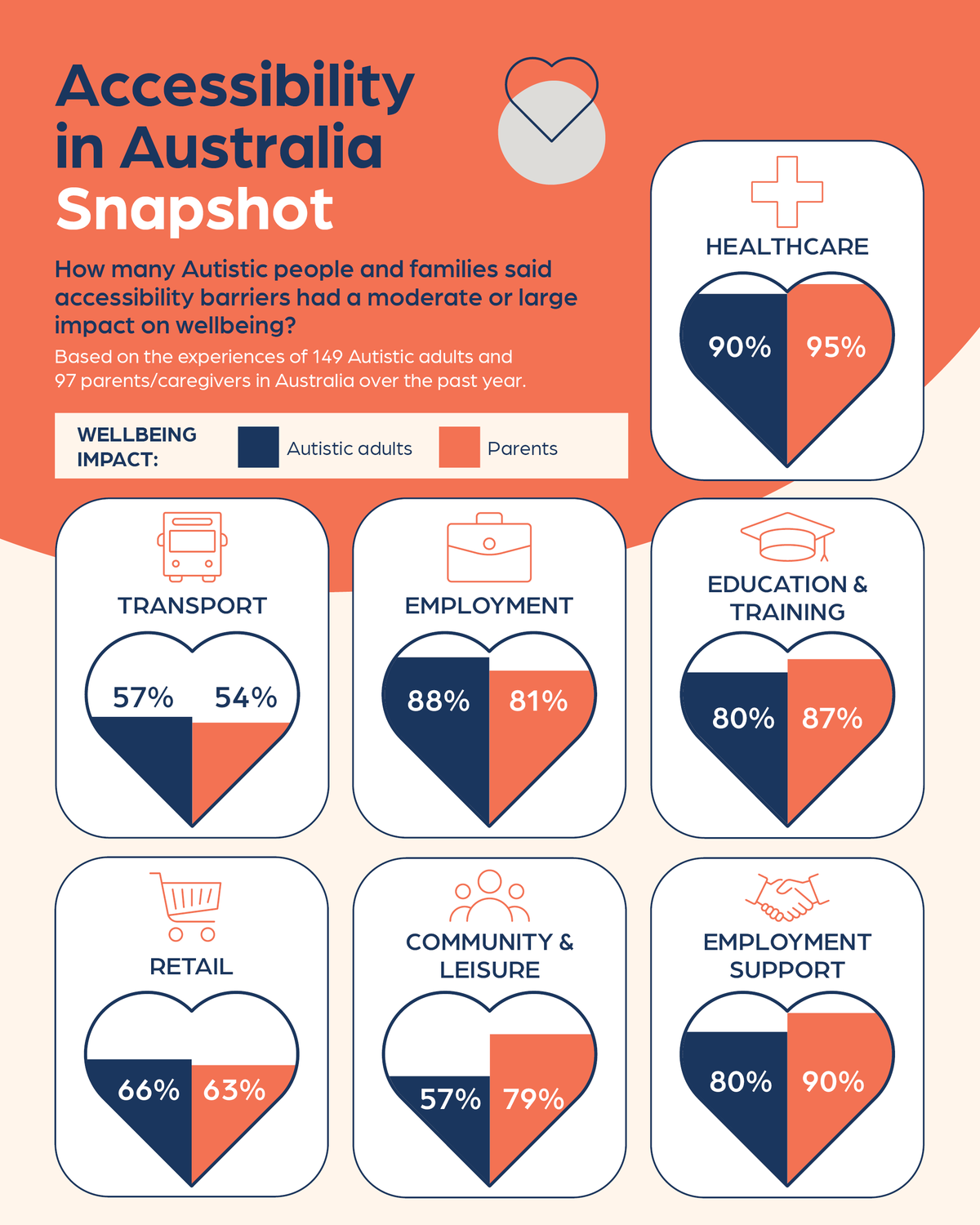
The Aspect Research Centre for Autism Practice (ARCAP) surveyed 246 participants – 149 Autistic adults and 97 parents and carers – to build a national picture of the accessibility barriers Autistic people encounter across everyday life. The researchers found accessibility barriers across healthcare, employment, public transport, retail, education and community activities are having a significant impact on wellbeing of Autistic Australians.


Retail emerged as the most commonly reported setting with accessibility barriers, with 82% of Autistic adults reporting difficulties in this environment, followed by employment (81%), community activities (72%), education and training, (71%), employment support services (71%), public transport (70%) and healthcare (64%). Download more facts and figures about accessibility in Australia.
The access burden of daily life
Accessing everyday places and services can require far more than simply turning up.
Participants described spending time researching, preparing for appointments, planning routes, advocating for adjustments and managing sensory demands. Many also talked about needing time afterwards to recover.
Some participants reported spending hours, days and even months searching for healthcare providers who could accommodate their needs. Others described routine appointments leaving them exhausted for days afterwards.


Inaccessibility is more than inconvenient
Accessibility barriers don’t just make everyday activities more difficult. Repeatedly navigating them can take a real toll.
Healthcare, employment, education and employment support services stood out, with 80% or more of participants who encountered barriers in these areas reporting a moderate or large effect on their wellbeing.
Participants also described what this can look like in everyday life – reduced energy, lost confidence and fewer opportunities to participate.
“I've withdrawn from a lot of things to focus on leaving enough sensory energy for essential tasks.” Autistic adult
For families, inaccessible environments could also mean missing out on experiences and spending more time at home.
“My kids have a very simple life, where much of their time is spent at home or school. They would have an enriched life experience and we could get out more often if accessibility was improved.” Parent of an Autistic child
Making accessibility the norm
The research findings show there is no single solution to accessibility. What works will vary between a hospital, workplace, supermarket, train station or community venue.
But there are common principles:
- clear communication
- greater predictability
- sensory accessibility
- flexibility
- staff who respond with understanding and respect.
Importantly, these shouldn’t be adjustments Autistic people and families have to repeatedly ask for. Accessibility should be considered from the beginning, built into how places and services are designed and delivered.
That also means listening to Autistic people and understanding the particular barriers within different settings. Practical changes at an individual organisation can make a difference, but their potential is much greater when they are part of a broader commitment to accessibility.
Guided by our Autism Friendly Framework, the Aspect Autism Friendly team works in partnership with organisations and Autistic people to identify barriers and deliver practical, impactful solutions to improve accessibility and inclusivity.