
Artificial intelligence is usually discussed in terms of productivity, automation and the future of work. But for Autistic people, one of its most interesting possibilities may be much simpler: helping everyday environments and information work better for the individual.
Craig Smith, Manager, Technology and Innovation at Positive Partnerships, says Autistic people are already finding practical ways to use AI to support executive functioning.
That might mean summarising information, interpreting an email, breaking a large task into smaller steps, or organising notes and lists in a way that suits how someone thinks and works.
In education, Craig is seeing similar possibilities emerge.
He recently worked with Autistic high school students on a design-thinking challenge where students began by drawing and writing ideas by hand, then used AI to turn those concepts into sophisticated visualisations.
Through his website, The Universal Sandpit, educators are also using AI tools to personalise classroom learning. One tool allows teachers to combine a student's particular interest with the curriculum topic being taught, generating ideas for making the learning experience more relevant and engaging.

The Universal Sandpit
But perhaps the more important opportunity is not helping Autistic people adapt to existing environments. It is using technology to make those environments more accessible in the first place.
AI can already help schools and workplaces scaffold instructions, caption videos, summarise information, create visual timelines and checklists, and present information in different ways. In the future, Craig believes workplace software itself could become far more personalised, adapting to how an individual employee works best.
This possibility comes with important questions.
Privacy, dependence on technology and equitable access all need careful consideration. Craig also believes Autistic people need to be actively involved in shaping the tools themselves.
He describes this as “technodiversity”, allowing people access to a range of technologies rather than assuming one tool or system will work for everybody.
There is also the risk of creating a new inclusion gap. If access to sophisticated AI tools is limited by income, location, education or workplace policy, those who could potentially benefit most may be excluded.
For organisations like Aspect, Craig believes the answer is thoughtful experimentation: creating safe opportunities for Autistic people, students and employees to explore emerging technologies and contribute to how they are developed and used.
One example captures the potential particularly well.
An Autistic person told Craig they use AI to help start tasks they find difficult. If they need to reply to an email, they ask AI to turn it into a secret-agent mission, complete with instructions, encouragement and a first sentence to get them started.
It is a small use of a very powerful technology, but perhaps that is precisely the point.
The future of AI and autism may not simply be about what the technology can do. It may be about giving people more choice in how they learn, work, communicate and navigate the world around them.
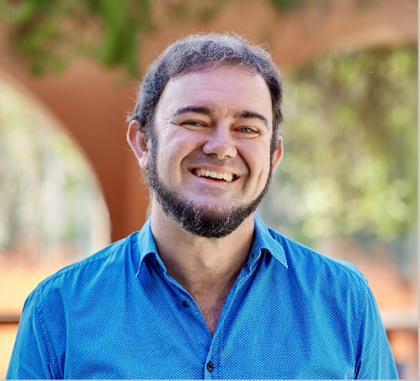
Craig Smith is the Manager of Technology and Innovation at Positive Partnerships.
Positive Partnerships is a national project funded by the Australian Government Department of Education and delivered by Aspect (Autism Spectrum Australia).