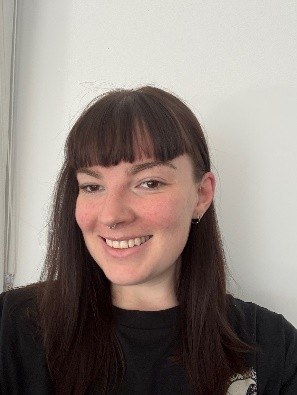
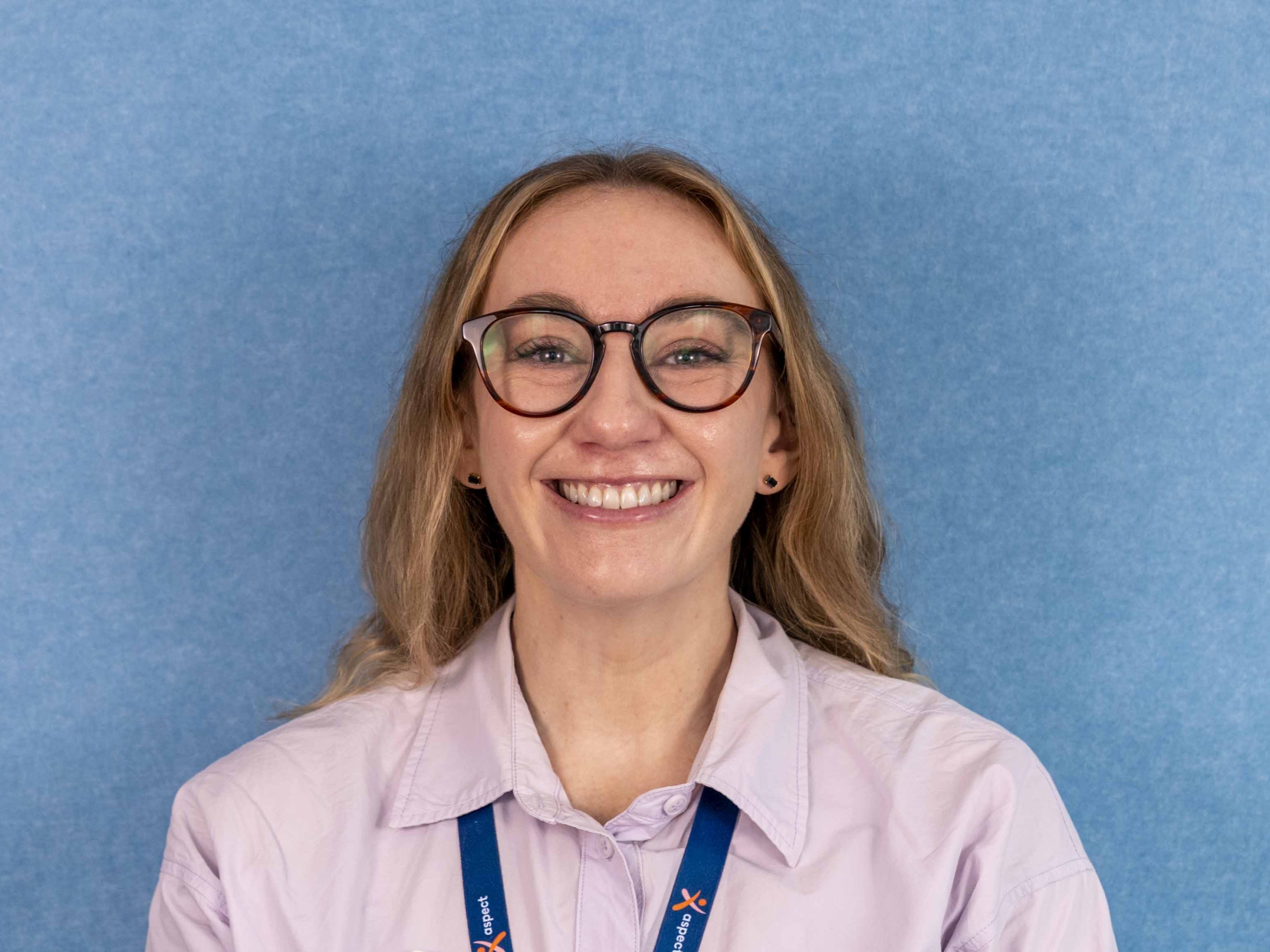
For sisters Isabella Smythe and Jessica Degrassi, working at Aspect has always been more than just a job. Bella is a Behaviour Support Supervisor & Social Worker at Aspect; while Jess is a PBS & Safeguarding Manager for Aspect’s Individual & Community Services.
Both have built their professional lives around supporting Autistic people. Both are passionate about inclusion, dignity and quality of life. And both, in different ways, have been shaped by the same belief that real change happens when you listen.
Their journeys into Aspect were separate, but their purpose has always been shared.
Finding their way to Aspect
For Bella, it started more than a decade ago, and with a nudge from her sister.
She began as a support worker, her first role in the disability sector. “It actually opened my whole world,” Bella says. “I immediately knew it was the right career for me.”
What stood out was Aspect’s commitment to strength-based support, a philosophy that continues to guide her work today.
For Jess, joining Aspect was something she had always aspired to. “I had always admired Aspect’s vision and commitment to Autistic individuals,” she says. “It was somewhere I would be proud to work.”
When she joined, it marked a significant milestone and the chance to contribute to best-practice autism support alongside others who shared that same commitment.
Learning from the people they support
Across their careers, both sisters point to the same source of growth - the people they work with.
For Bella, one participant shaped the direction of her career.
Supporting an adult with complex needs over several years, she saw firsthand how small, person-centred changes could transform quality of life.
“We were able to support him to re-engage in the community and reduce behaviours of concern,” she says. “That experience really drove my passion.”
For Jess, it’s the collective impact that has stayed with her.
“I’ve seen incredible dedication of staff across teams who have supported individuals with complex needs to improve quality of life and participate in their community. I’ve enjoyed watching both active support staff and PBS practitioners from Aspect work together to create amazing outcomes for Autistic individuals. Those moments stay with you.”
How understanding has evolved
Over the past 60 years, and even within their own careers, both have seen a clear shift in how autism is understood and supported.
“There’s been a real move towards inclusion and neuro-affirming practice,” Jess explains. “There’s also a much stronger focus now on listening to Autistic people and involving them in decisions that affect them.”
That shift has also changed how practitioners think about quality of life.
“Earlier in my career, I would sometimes make assumptions about what quality of life should look like,” Jess says. “Over time, I’ve learnt the importance of really listening and understanding what matters to each person.”
Bella has seen a similar change in her own work.
“My understanding has become more strength-based,” she says. “It’s about working with people to find solutions that suit them, rather than trying to fit them into something that doesn’t.”
Both say that while progress has been significant, there is still more to do. Particularly in ensuring all Autistic people, including those with complex needs, have the opportunity to live a full and meaningful life.
What inclusion really means
Ask either sister what inclusion looks like, and the answer isn’t abstract. It’s about being able to participate in everyday life.
For some, Jess explains, it’s being able to go to a local café and feel part of the community. For others, it’s having a voice in policies and decisions that shape autism support in Australia.
For Bella, inclusion starts with autonomy. And that perspective is shaped not only by her work, but her own lived experience as an Autistic person.
“Being neurodiverse myself, visibility and understanding is so important. Involving participants in the development of their own behaviour support plans allows for advocacy and autonomy over how others respond. Being a social worker, I am passionate about inclusion and aim to practice this everyday through my work using a strength-based approach which celebrates a different brilliant.”
Bella is passionate about creating opportunities for active engagement and meaningful choice, using people’s interests in age-appropriate ways.
“We all make choices every day,” she says. “But many Autistic adults in supported accommodation don’t always get to make basic choices around things like food, what they wear, or how they spend their time.”
“When people have more choice and control, you often see a reduction in behaviours of concern and an improvement in quality of life,” she says.
Both emphasise that inclusion isn’t one-size-fits-all but that it’s individual, evolving, and driven by the person themselves.
The work still to be done
Despite progress, both are clear that there’s more to do.
Jess highlights the need for stronger support for Autistic people with complex needs, particularly those who communicate in non-traditional ways.
“I would love to see further consideration and focus on Autistic individuals who also have intellectual disability, complex needs and behaviours. Continuing to ensure that the voices of those who may not be able to speak, but communicate clearly and meaningfully in other ways have a space at the table is vital to support those across the spectrum.”
She also points to the importance of safeguarding, something she sees as a shared responsibility.
“Safeguarding takes a community,” she explains. “It relies on people who know the individual well including families, support teams, practitioners, and communicating clearly and taking action when something isn’t right.”
Drawing on her experience both in Australia and internationally, Jess says there’s a lot the country is getting right.
“Overall, Australia does an amazing job in supporting neuro-affirming practice,” she says. “But there’s still more to do, particularly in mainstream health and education settings.”
She adds that one area where Australia stands out is in listening to Autistic voices. “That’s where we’re ahead of many other places.”
Bella points to the environments around us.
“I would like for companies and places to increase availability of sensory and quiet spaces and low-stimulus environments such as shopping centres, pools, libraries and other community venues,” says Bella.
“I would like to continue to see Autistic people contribute to policies and consulted around making spaces more autism friendly. It would be great for hospitals to be more understanding and have staff specialising in this space to make Autistic people more comfortable in settings that are not designed for neuro-diverse people.
“I am truly passionate about Autistic people having a voice in, and access to, their community and to contribute to spaces that promote safety and inclusion.”
Together, they see inclusion as something bigger than services. They agree it’s about the environments people move through every day.
A shared legacy
Working in the same field - and at the same organisation - has brought the sisters even closer. They work through solutions together and drive each other to improve their practice and approach.
“We share ideas, challenge each other, and celebrate the wins together,” Bella says.
Jess laughs that they sometimes need a “no work talk” rule at family catch-ups, but the connection runs deeper than that.
They are part of something bigger.
For 60 years, Aspect has supported generations of Autistic people, families and professionals. And now, as sisters, Bella and Jess are contributing to that legacy together.
“Even in a small way,” Jess says, “we hope we’ve made a difference.”