
Across schools and systems, educators are asking the same questions:
How do we know our students are really learning?
How do we assess progress fairly when learning is non-linear?
And how do we make data work for teaching, not against it?
Between 2022 and 2025, Aspect Schools undertook a deliberate, system-wide effort to address these questions, particularly for Autistic learners and students with complex communication and learning needs.
Why change was needed
Like many education systems, Aspect Schools were deeply committed to student learning, but that commitment was not always matched by coherence. Assessment practices varied widely between schools, data was often anecdotal rather than curriculum-linked, and teacher confidence in assessment varied significantly. For around 20% of students, primarily those with complex needs, data was scant so learning progress was largely invisible, making it difficult for leaders to evaluate impact or plan strategically.
The challenge was not effort, but the absence of a shared, autism-informed framework that reflected how autistic students learn and how progress can be demonstrated.
What made the biggest difference
Shared language and exemplars strengthened professional judgement. Distributed instructional leadership through data champions helped to build consistency. Purposeful data use clarified why data was collected and how it should inform teaching. Most importantly, students previously underrepresented in data became visible.
What changed in classrooms
Assessment increasingly informed planning, differentiation, and intervention. Teacher judgements became more consistent and accurate, data quality improved, and leaders could distinguish genuine learning patterns from implementation noise.
A different way forward
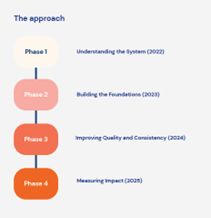
Rather than adding more tools, the focus was on coherence. Over four staged phases, schools aligned assessment with curriculum while recognising non-linear learning, strengthened teacher judgement, ensured every student could demonstrate progress, and built leadership capability to evaluate impact over time.
What educators can take from this work
- Reliable assessment takes time.
- Moderation matters more than tools.
- Interaction and communication underpin learning.
- Longitudinal data is essential for understanding diverse learning pathways.
- Equity improves when systems are designed for all learners.
Looking ahead…
The next phase is not about doing more, but about doing what works more consistently and with greater instructional impact. When assessment, teaching, and leadership are aligned, classrooms become more equitable and powerful places for learning.