What does creativity give you that spoken language sometimes can’t?
For me, creativity connects me to my body, a place language can’t always access. When we are young, we experience the world before we are verbal, and a lot of what we know about ourselves lives in the body, in sensation, in feeling. Art gives me a way to access and express those parts of myself that spoken language doesn’t reach.
After a big day, I am non-verbal. Around 30% of Autistic people are minimally speaking or non-speaking, so finding other ways to communicate, interact, and be understood is important.
But even for those of us who do use words, language can be limiting. It often asks us to translate something visceral into something tidy and linear, and that translation can lose a lot along the way.
I’ve seen this clearly in therapeutic and learning contexts too. In art-based or multimodal approaches, people can reach insights or breakthroughs they may not achieve from conversation alone. I remember a client who talked constantly, going around in circles. When we were invited to move under a table and look closely at their visual work - nuts, bolts, shapes - something shifted. It acted like a circuit breaker. Suddenly there was clarity. The work didn’t rely on words, and because of that, something new became possible.
Trying to explain all of this in words is actually really hard, which probably says everything!
How do the arts support Autistic ways of thinking, feeling, and processing?
For me, art is deeply tied to regulation.
The process itself is stimming, tactile and visceral. It brings me into my body in a way that everyday life often doesn’t. The sensory qualities - texture, movement, sound, and smell - help regulate my nervous system. Instead of being stuck in my head, I can be grounded in sensation.
I think in images, not words. Visual processing is a strength for many Autistic people, and the arts honour that. They don’t demand eye contact, small talk, or sitting face-to-face over a coffee. You can work side by side. You can engage through parallel play. The “rules of engagement” are clearer: here’s the shared task, here’s what we’re making, here’s what we’re working toward.
Art also allows collaboration without constant social performance. You don’t have to look at someone to participate. You’re creating something together, in the moment, with a shared focus, which is also connection.
I remember being at an arts festival once, completely overwhelmed by the crowds, the noise, and the music. I was leading a workshop at the time. Instead of forcing myself to talk through it, I allowed myself to simply create art non-verbally. People came up, watched, and asked questions. Because I was painting, I was more regulated; I could demonstrate technique through gesture, visually. I didn’t have to talk constantly, and I was still able to connect and resonate with people.
What role do sensory experiences play in your creative life?
A huge one.
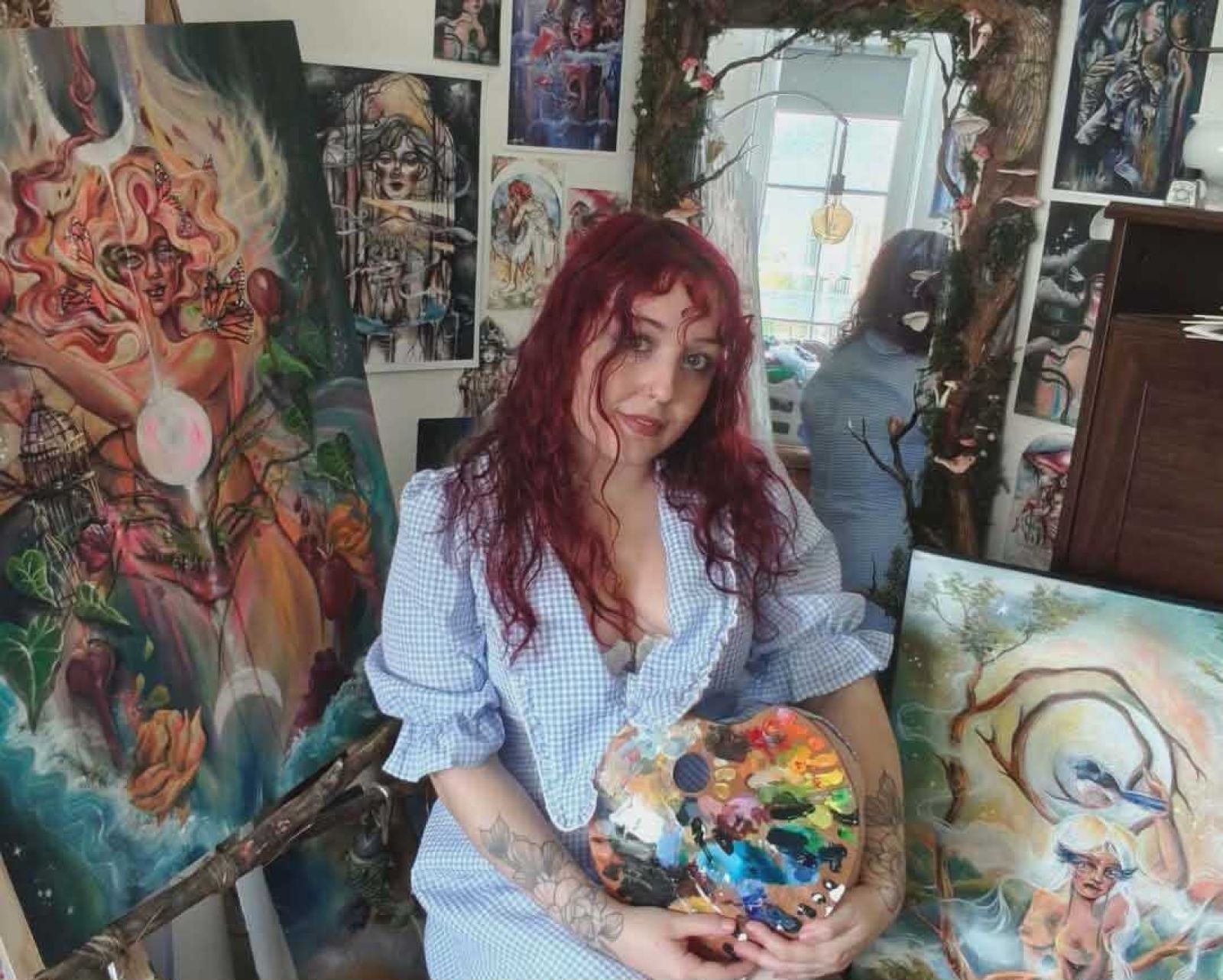
Sensory seeking gives me a sense of control and predictability. I know how materials feel and how they behave. That familiarity is calming and joyful at the same time. There’s pleasure in repetition, texture, and knowing what to expect.
At the same time, there’s discovery. Making art can feel like archaeology, or slowly uncovering something that’s already there. Experimenting with new materials or mediums lets me learn their rules, their limits, and their surprises. The balance between predictability and exploration feels like a safe place to learn for me.
Have the arts helped you regulate, cope, or reconnect?
Absolutely. There’s something about the tactile act of putting a brush to canvas that helps my brain slow down. I'm able to be in my body when everything else feels too fast or too loud.
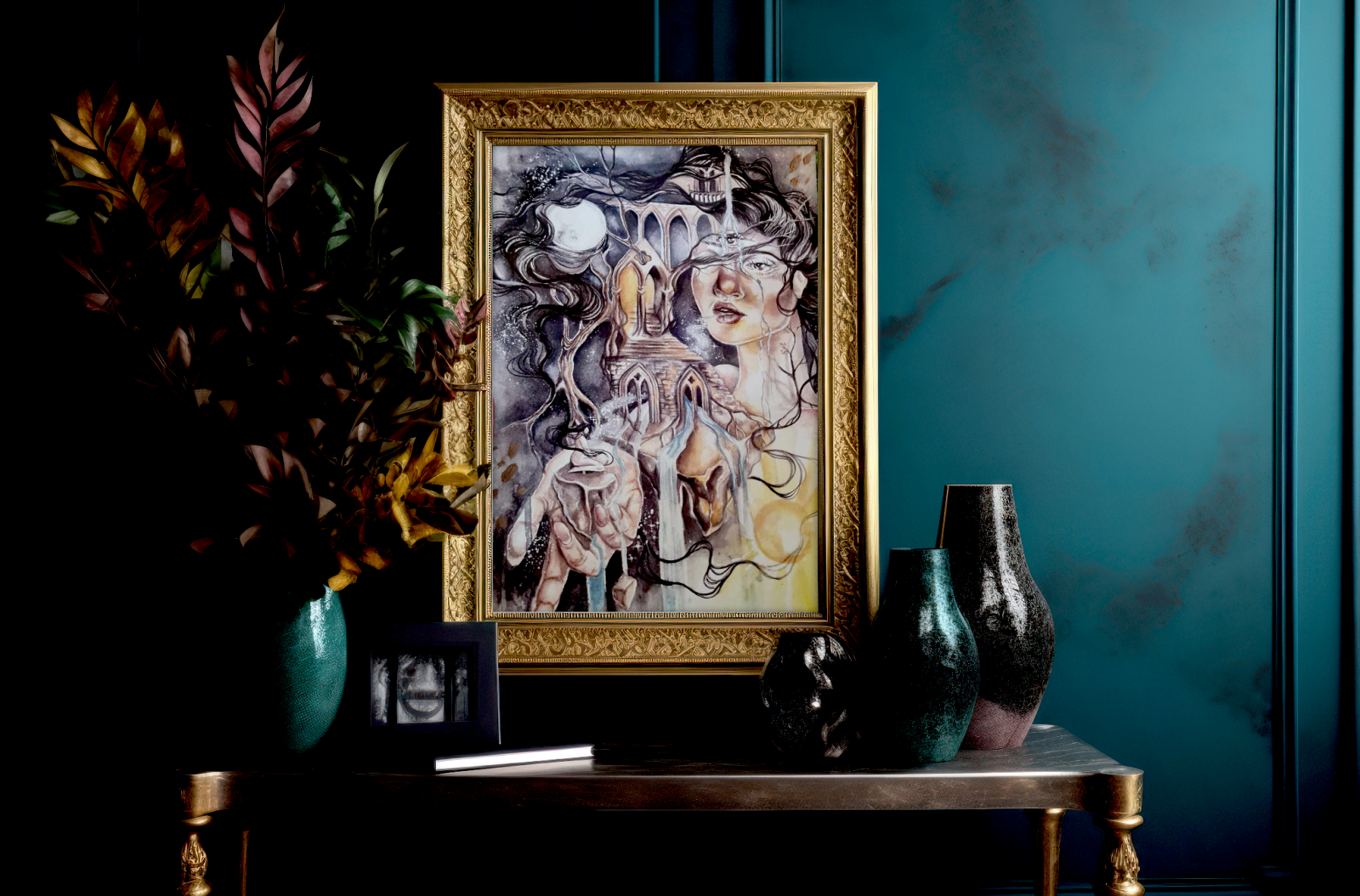
Selling my art at markets has been another form of connection. Instead of small talk, I get to talk about my interests. People connect with the paintings, and through them, they connect with me. The art does some of the social work for me.
Why is it important that Autistic people are not just participants, but leaders in the arts?
Because we’re human too! We have valuable ideas and feelings, and we need to exist publicly alongside what society sees as “normal.”
Autistic people see and experience the world differently. If the arts are truly about self-expression and identity, it’s important to include us, inviting others to feel or experience how the world is for us. Autistic-led work doesn’t just include Autistic people, it expands what art can be.
Leadership means we’re not just fitting into existing structures, but also shaping them. We can show different ways of working, creating, and being.
What do you wish more people understood about autism and creativity?
That creativity isn’t just painting on a canvas.
It can look like lining up objects, building intricate Lego worlds, designing miniature train networks, recognising patterns, making connections others don’t see. Creativity shows up in maths, music, movement, systems, and structures. Pattern recognition, which is often described clinically, is also a creative strength.
Creative work can be a way to see inside Autistic minds, especially when verbal communication isn’t accessible. It’s not “less than” language; it’s another language entirely.
What do safety and autonomy in creative spaces mean to you?
So many spaces judge Autistic people simply for existing as themselves.
Creative spaces are often different, because they allow people to be authentic and are valued because of their weirdness, not in spite of it. In improv, for example, there’s an explicit rule that whatever comes first to your mind has value (“Yes, and”). That kind of environment makes it possible to take risks, to play, to role-play, and to exist without constant self-monitoring - “Is who I am okay and accepted?”
To me, safety and autonomy means that I’m valued as myself; and that I am accepted, trusted to know what I need, how I work best, and what helps me thrive.
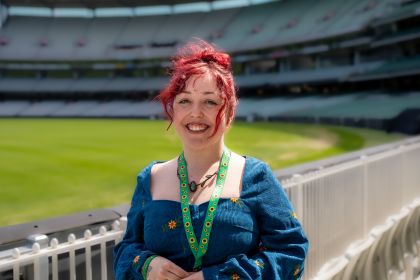
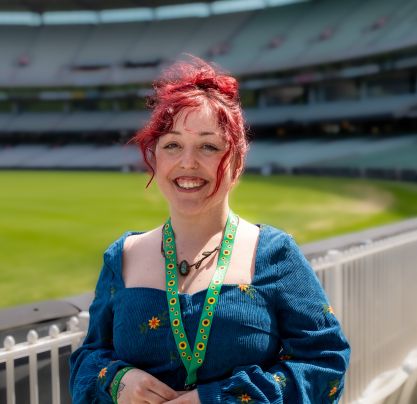
Jessica Novak (She/They)
Autistic Consultant
Jessica is a passionate Autistic visual artist with a background in art teaching, mural making, and corporate graphic design. She loves to advocate for autism inclusion and belonging in every facet of life that she can; she believes that all different kinds of neurotypes make the world go round! Jessica holds a degree in journalism and writing and is part of Aspect’s Autism Friendly team in Melbourne as an Autistic Consultant.