Our Autism Friendly team has worked closely with arts organisations for many years including museums, theatres and large-scale events. We believe art should be accessible, joyful, and a genuine career pathway for Autistic people that are deeply creative. Autistic people bring perspectives that enrich culture and strengthen the cultural landscape. Art is a powerful way to connect, communicate beyond words, express ourselves, and build community.
Autistic people have long shaped and enriched the arts. The next step is continuing to work in partnership to create environments that make engaging with the arts easier, more accessible, and genuinely welcoming.
We support organisations through autism-friendly assessments, staff training, workshops, and the development of practical tools, such as visual stories and guides. We also collaborate on reviewing and redesigning public programs so they feel more accessible, welcoming, and meaningful. This work is grounded in lived experience, not just theory.
Sensory barriers in arts spaces
Sensory barriers are one of the main reasons Autistic people struggle to attend or stay at arts events.
Common barriers include:
- Loud music
- Multiple sound sources at once
- Echoing acoustics
- Hard surfaces that amplify noise
- Bright lights in your eyeline
- Harsh contrast
- Flickering lighting
Large open spaces can feel disorienting, especially when combined with crowds. Crowding increases stress and fatigue, and many venues do not provide quiet or retreat spaces. Without a place to regulate, Autistic people may decide not to attend or may need to leave early.
Getting to the venue can also be draining. Busy public transport, navigating cities, or unfamiliar routes require additional energy.
I have attended events where I loved the concept, but the crowd size made it impossible to stay. Sometimes the impact is not immediate. Recovery can take days.
At a program level, materials, textures, and smells also matter. These can be regulating and joyful for some people and overwhelming for others. The issue is not sensory input itself, but whether people have choice and control.
The impact of predictability
Unpredictable environments increase anxiety and reduce participation.
When people do not know what to expect, they may choose not to attend. Others may attend but shut down, disengage, or leave early. A single negative experience can influence future decisions and spread through community networks.
Predictability does not reduce enjoyment. For many Autistic people, it increases it. Knowing what will happen allows us to plan, manage energy, and focus on the art rather than coping with uncertainty.
Preparation creates capacity.
Supporting preparation and predictability
Clear, practical information makes a difference.
People often want to know:
- Where the venue is
- How to navigate the space
- How long the event runs
- Whether there are breaks
- Who to approach for help
- What participation looks like
Helpful tools include visual stories, step-by-step guides, clear signage, and POV social media content. The goal is not to control the experience, but to reduce unnecessary uncertainty so Autistic people can engage more fully.
Social and communication barriers
Arts spaces often have unspoken rules. This can make participation stressful. Art is frequently abstract, meaning that many people may feel unsure how they are meant to interpret it or respond. For Autistic people, especially those who are non-verbal, minimally speaking, or very literal, this uncertainty can become a barrier.
Small talk and informal networking can also be overwhelming. Many people want structure rather than social guessing. Gallery openings can feel hierarchical or exclusive. Expectations around dress, behaviour, and belonging are not always clearly stated. Arts spaces often celebrate difference in theory, but they do not always design for it in practice.
Supporting social and communication access
Small changes can make a significant difference.
- Train facilitators to adapt and respond flexibly
- Use Easy English
- Reduce jargon
- Provide a layered interpretation
- Offer activity books and audio guides
- Include tactile prompts or structured tasks
It also helps to explicitly state that art is subjective. Make it clear that different interpretations are valid and that there is no single correct response. Designing spaces with different zones for quiet reflection, parallel activity, collaboration, or discussion allows people to choose their level of social engagement. Reducing guesswork reduces stress.
The biggest changes organisations could make right now
Many autism-friendly programs already exist, but they are often not promoted effectively. Autistic people need to know they are welcome before they attend.
Promotion should happen:
- On social media
- Through disability networks
- Via community partnerships
- In clear and accessible language
There is a strong need for more sensory-friendly events for adults, especially outside standard work hours. Accessibility should not stop at childhood. Organisations should explicitly welcome support people and ensure adequate staffing.
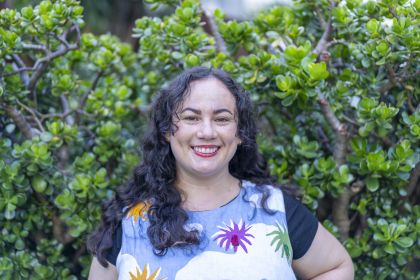
Rebecca Street (She/Her)
Autistic Consultant
Bec is a late-diagnosed Autistic and ADHD (AuADHD) woman who lives with various co-occurring mental and physical health challenges. She works at the intersection of arts practice and accessibility. She has led and contributed to projects with the National Gallery of Australia, and the Museum of Contemporary Art and Create Space initiative. She has also hosted her own inclusive art-making workshops with the Art Gallery of New South Wales and Inner West Council. She loves to bring this experience to work in partnership with arts and cultural organisations and believes arts and culture should be accessible to all.