Imagine arriving somewhere new and not knowing the rules.
Should you wait to be seated? Which queue is the right one? Can you touch the display? Do you tap on and off the tram, or just on?
Every day, we rely on hundreds of unwritten rules to move through community life. Most people don’t notice them until they find themselves in a situation where they don’t know the rules. For Autistic people, this is a critical part of everyday life.
Community life requires constant coordination with other people.
Just to complete everyday community activities, we have to navigate different environments, each with its own rules and expectations.
In the UK, particularly in London, the common etiquette is to stand on the right side of the escalator. In Australia, the general etiquette for standing on escalators is to stand on the left side.
Accidentally breaking the rules and getting things wrong can be difficult for everyone—the person involved, other community members and staff—but especially if you have a history of being different, inadvertently making mistakes and being challenged or criticised for them, as many Autistic people have.
Getting this right requires specific kinds of knowledge.
- Procedural Knowledge – ‘How do I complete this task successfully?’
How do I check in at the airport? Can I touch this exhibit in the museum? Do I wait to be seated in the café or just sit down? Am I allowed to walk my dog in this section of the park? Do I tap on and off when on the tram (or just on)?
- Shared or Common Knowledge – ‘How do we cooperate in the same space and activity?’
Can I talk to my daughter in this Quiet train carriage? Which mug can I use in the office (so I don't use someone else's)? Where do I wait to queue for the bus (so I don’t look like I’m pushing in)? Is it OK to do things in this meeting that help me regulate, such as fidgeting or pacing?
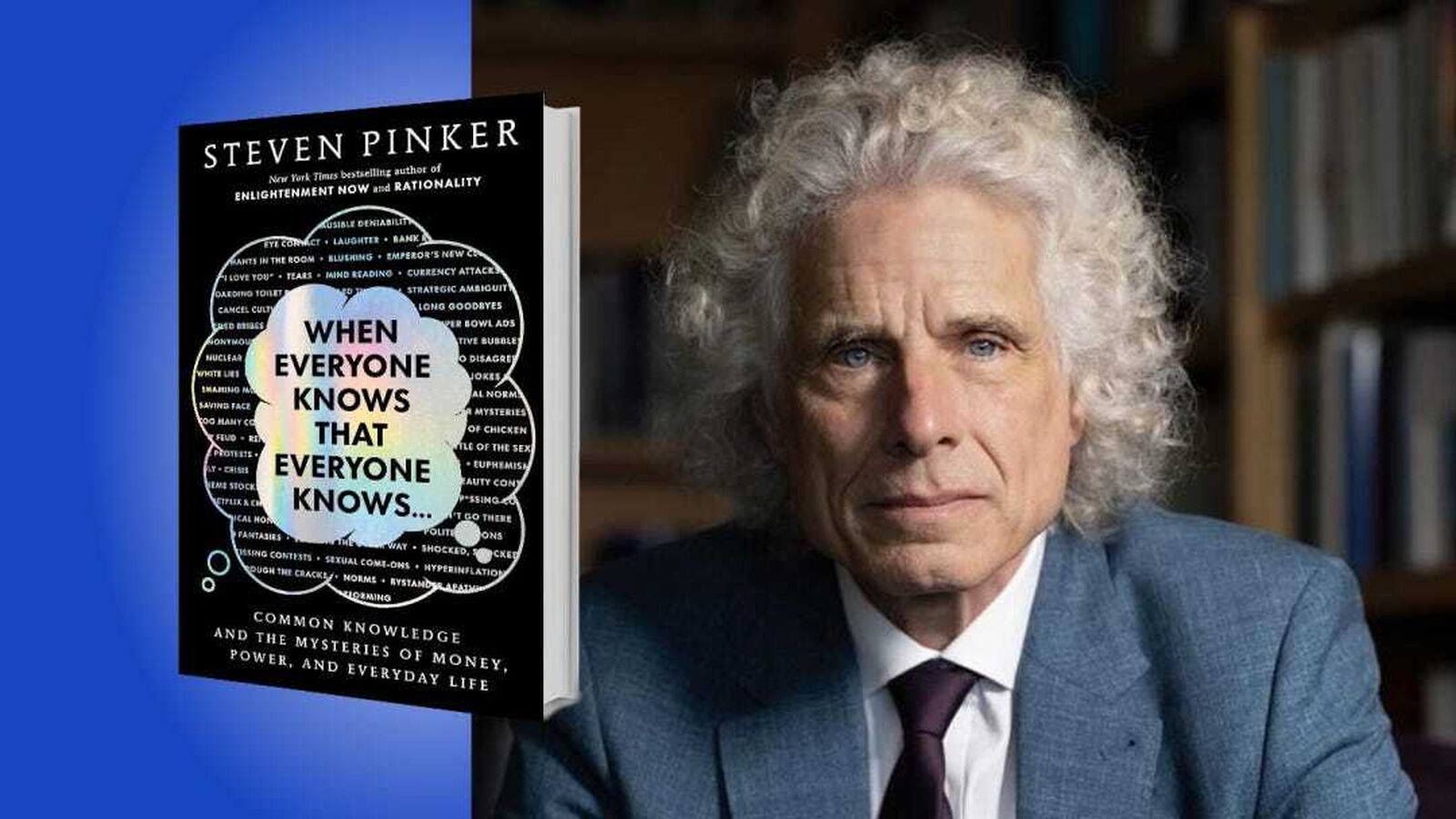
Stephen Pinker’s book ‘When Everyone Knows That Everyone Knows... Common Knowledge and the Science of Harmony, Hypocrisy and Outrage’ demonstrates the importance of common knowledge. He suggests that:
- Assuming that people automatically know the rules is likely to result in mistakes.
- Unexplained social conventions are much less effective in developing explicit common knowledge.
For many Autistic people, these unwritten expectations create an unnecessary barrier. This is especially true when considering Autistic and non-autistic people cooperating.
Research into the double empathy gap (that Autistic and non-autistic people have different but equally valid understanding and perspectives) reminds us that Autistic and non-autistic people often interpret the world differently. This is not because one is right and the other wrong, but because they have different lived experiences.
At the same time, much of community life relies on the hidden curriculum, being social expectations that are rarely explained, but simply assumed to be universally understood.
Unfortunately, explaining expectations by speech alone has its limits in promoting successful communication and comprehension of expectations.
- It is fleeting and so ‘disappears’ quickly and can be forgotten, especially with people working hard to process new information.
- It can be misunderstood if not expressed clearly and concretely.
- It can be missed if a person is trying to manage or block out external noise and distraction.
So how else do we promote success and cooperation in public spaces?
The solution isn’t simply more information. It is making expectations clear, consistent and easy to access – before someone has to ask for help.
Years ago, society was much more oriented to negative rules, such as, what not to do (imagine the old ‘no diving’, ‘no running’ swimming pool rules) and punishments if you get it wrong.
Aspect Autism Friendly works with our partners across transport, tourism, health, arts and community settings, to help organisations identify hidden expectations and redesign environments so people can understand how to navigate them with confidence.
- Sometimes this means better signage.
- Sometimes it's a visual story before someone visits.
- Sometimes its redesigning a customer journey, changing staff communication or making procedures more predictable.
The goal is always the same: reduce uncertainty before it becomes stress.
We are developing an understanding that helping people know what to do is more effective than only telling people what not to do.
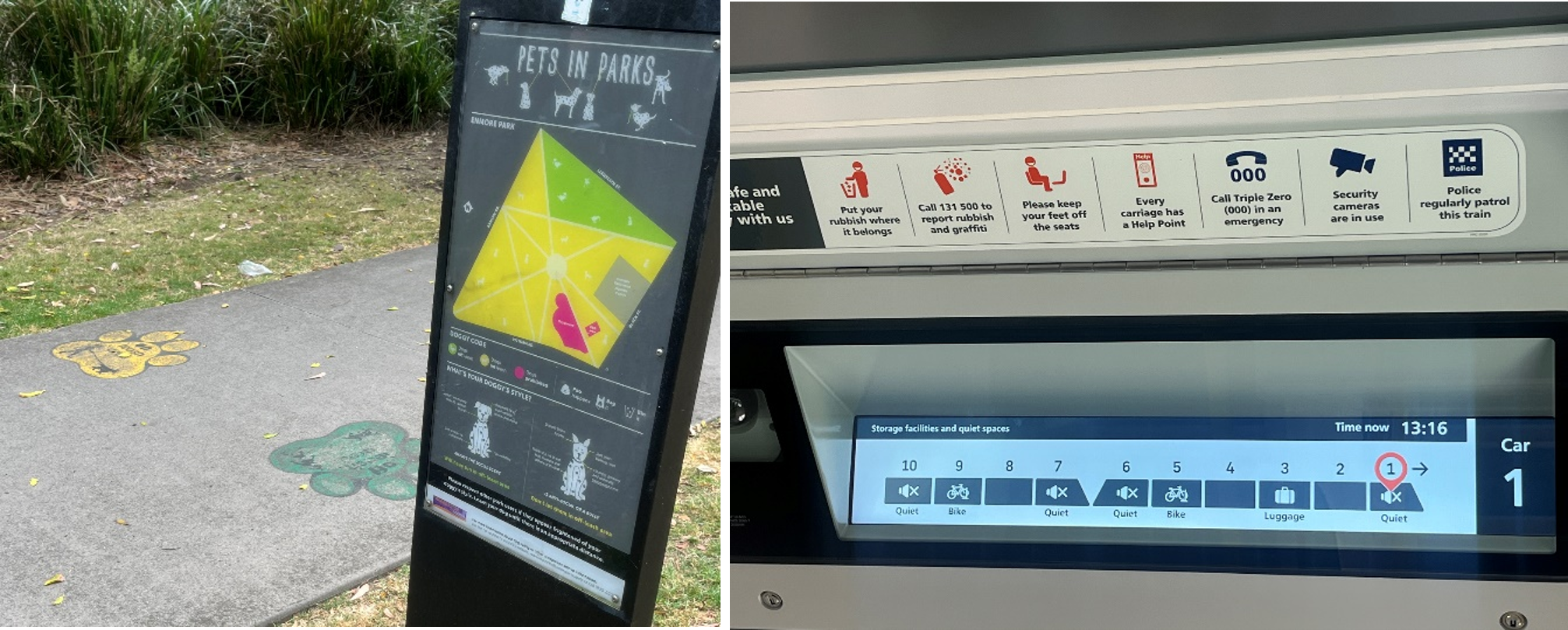
For example, if you want to know what part of the park you can walk your dog (green paw = yes, yellow = on lead), the expectations can be made clear. If you want to know the rules on the train and where a quiet carriage is, the signage helps.
These signs mean that we get things right without making a mistake or having to ask for help. This clarity builds confidence and reduces anxiety.
When spaces don’t have good clarity about what the rules or expectations are, people make mistakes, get upset and sometimes angry with each other and with staff (think about the space between seats in airplanes and whether or when it is OK to recline or not!)
We can all learn how to succeed, what is expected of us, what is appropriate, if it is clearly communicated in each environment.
Clear visual communication of expectations (and other options such as Braille or text-to-speech devices) means that, not only do I know, but that we know that other people know too. And if they don’t, it is easy to show people the information to help them understand.
Every moment of uncertainty, every mistake and every time someone needs to ask for help is another drop in an already overflowing bucket of stress.
If people regularly ask the same questions, make the same mistakes or rely on staff for the same guidance, it's worth asking whether the environment is communicating its expectations clearly enough. When organisations work alongside Autistic people (as Aspect Autism Friendly does) to uncover those hidden assumptions, they can create spaces that are more welcoming, predictable and inclusive.