For a long time, I thought everyone was working as hard as I was just to get through the day.
I thought everyone anxiously replayed conversations, agonised about eye contact, felt exhausted after social situations.
Most of all, I thought the problem was me.
From the outside, I looked like I was coping. I had a job, family, friends and blonde highlights. But underneath, I worried I was broken. I was using more energy than I had trying to fit in, meet baffling social expectations and avoid doing the ‘wrong’ thing.
At the time, I didn't have a word for what I was experiencing. After many years and an eventual autism diagnosis, now I do.
It's called masking.
What is masking?
Masking (sometimes called camouflaging) is when an Autistic person consciously or unconsciously changes, hides, or suppresses parts of themselves to fit in, meet expectations or feel safer in a particular environment.
Masking is not about being dishonest or fake. For many Autistic people, it develops in environments where Autistic ways of communicating, moving, or experiencing the world are not fully understood or accepted.
Some people know when they are masking. For others, it happens automatically. Many Autistic people only recognise they are masking after learning more about autism or hearing other Autistic people talk about their experiences.
Why do Autistic people mask?
There is no single reason, and all reasons are valid.
For some people, masking is about belonging. For others, it is about avoiding judgement, bullying, discrimination or unwanted attention. It can also help people navigate school, university, work, healthcare and social situations that are often built around non-Autistic expectations.
What masking can look like
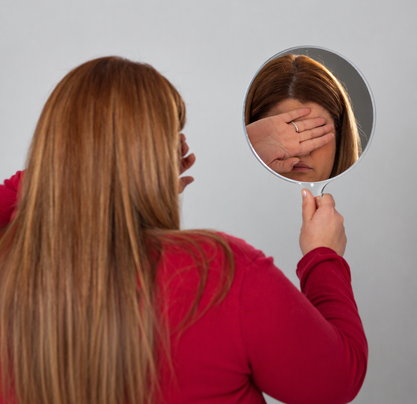
Masking looks different for everyone.
Examples can include:
- forcing or monitoring eye contact
- hiding stimming or sensory discomfort
- rehearsing or analysing conversations
- copying other people's communication styles or body language
- pretending to understand when more explanation or processing time is needed
- avoiding interests or changing behaviour to fit in.
For me, masking looked like constantly checking whether I was behaving ‘correctly’. It looked like replaying conversations in my head, pushing through sensory overload, and spending so much energy trying to live the way I saw others living around me that there was very little left for anything else.
The hidden costs of masking
Masking can help people navigate situations that feel difficult or unsafe, but it can also be exhausting.
Research into neurodiversity and mental health has linked higher levels of masking with increased stress, anxiety, depression, lower wellbeing and Autistic burnout: a state of physical, mental, and emotional exhaustion linked to ongoing stress and unmet needs.
Some Autistic people also describe:
- feeling like they are performing rather than participating
- struggling to recognise what feels natural to them
- feeling disconnected from their identity
- having support needs overlooked because they appear to be coping
- needing significant recovery time after social situations, study or work.
At the same time, masking is not always negative. Some people choose to mask in certain situations because it helps them stay safe or achieve their goals. For many people, the challenge is not masking itself but feeling they have no choice about when or how much they mask.
A note on unmasking
You may hear people talk about unmasking.
For some Autistic people, unmasking means becoming more aware of their needs, expressing themselves more naturally or reducing certain masking behaviours.
There is no 'correct' way to approach unmasking and for many Autistic people, the goal is not to stop masking completely. Instead, it may be about finding people, places, and situations where less masking is needed.
This might include:


Taking extra time
to process information
Using writing
or other alternative forms of communication

Wearing headphones
when needed
Taking sensory breaks
to rest and reset

Stimming
when it feels comfortable and safe
Talking openly
about support needs with trusted people

Spending time with people
who respect your communication style
Connecting
with other Autistic people
Showing up authentically
For a long time, I believed I was failing at things that seemed easy for everyone else. What I eventually realised was that I had been working incredibly hard to navigate a world that often expected me to hide parts of who I was.
Masking is not a personal failure. For many of us, it is an understandable response to environments that may not always feel accepting, accessible or safe.
For me, learning about masking has helped me replace self-criticism with self-understanding. I've also learned that unmasking does not have to mean stopping masking completely. Instead, it can be about finding people, places and communities where less masking is needed, where you can communicate in ways that work for you, meet your sensory needs and feel accepted as yourself.
I'm still learning what it means to unmask and to show up as my authentic self. Some days that feels exciting, and some days it feels scary. But there is something powerful in learning that however I and others do show up is truly okay, because none of us were ever really broken in the first place.
References
Field, S. L., Williams, M. O., Jones, C. R. G., & Fox, J. R. E. (2024). A meta ethnography of autistic people's experiences of social camouflaging and its relationship with mental health. Autism.
Khudiakova, V., Russell, E., Sowden Carvalho, S., & Surtees, A. D. R. (2024). A systematic review and meta analysis of mental health outcomes associated with camouflaging in autistic people. Research in Autism Spectrum Disorders.
Zhuang, S., Tan, D. W., Reddrop, S., Dean, L., Maybery, M., & Magiati, I. (2023). Psychosocial factors associated with camouflaging in autistic people and its relationship with mental health and well being: A mixed methods systematic review. Clinical Psychology Review.