



How ‘simple’ tasks can feel overwhelming
This is a true story about my first attempt at making a toasted sandwich. I hope it gives you insight into how my brain works.
I am making my first toasted sandwich. I have watched my mum do it many times. Bread, butter, cheese, tomato, and ham. How hard can it be?
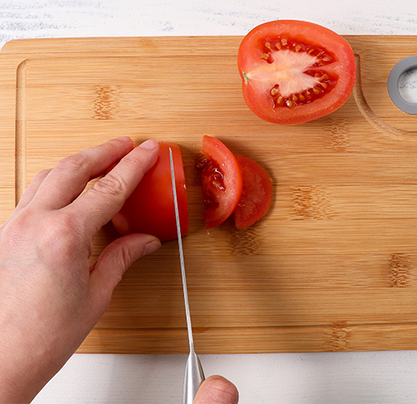
I lay out the ingredients. I start with the tomato. That seems simple enough.
Wait!
Which knife should I use? The serrated one? The chef's knife? The small paring knife? What are the pros and cons of each, I wonder? The chef's knife is blunt! Should I sharpen it first? Does that compromise its safety? How do I sharpen a knife?
Wait!
Which chopping board should I use? The wooden one looks dirty. The red one is meant for meat, and the green one is meant for vegetables. But has my family been following that rule? Should I wash the green one again, just in case? Is there a risk of cross-contamination?
Wait!
How should I hold the knife? How do I keep my fingers out of the way? Why is my pinkie sticking out like that? Should I push the knife forwards or backwards? What angle will keep the tomato stable? Let me quickly watch a video about this on YouTube.
Wait!
How thick should the slices be? What are the pros and cons of thin slices? Oh no! The slices aren't the same size. I can't use that slice. Should I cut out the hard bit in the middle? Is it edible? What will happen if I eat it? I'd better Google that.
Ugh!
I've got tomato juice on my hands and on my shirt. I need to wash my hands and clean the table. Where are the clean tea towels? My wet shirt is bothering me. I need to change my shirt.
Wait!
I smell burning. The sandwich press is smoking. Is that normal? Have I started a fire? What do I do about that?

My experience


Getting 'stuck'
thinking about details

Prioritising working out what matters most
and where to start

Making decisions
when there are lots of options

Shifting between different steps
of the task

Dealing with uncertainty
or vague instructions without feeling anxious.
As a result, I sometimes avoid seemingly ‘simple’ tasks, such as cooking, getting petrol, doing laundry, making phone calls, and ordering food.
Why can everyday tasks feel difficult for some Autistic people?
Some everyday tasks that might seem simple to others might be more difficult for Autistic people for a variety of reasons. This may include difficulties with executive function which impact everyday life (Johnston et al., 2019) and anxiety, intolerance of uncertainty, sensory sensitivities (Hwang et al., 2020).
A study by White et al., 2024, found that Australian Autistic young people wish to be prepared to engage in real-life experiences during transition preparations, helping them to develop the skills they need in adulthood. Many Autistic young people identified everyday tasks as important to them and felt that they didn't feel prepared or receive enough to learn the everyday skills that they needed in their post-school lives (White et al., 2024).
Keep in mind that many non-Autistic people may also find everyday tasks challenging for various reasons.
What helped me
Research supports that self-compassion can improve emotion regulation and mental health outcomes for Autistic people (Cai et al., 2024).
A few things help me when I’m learning a new skill:
Clear instructions

Having someone show me each step
then letting me try for myself

Having clear written instructions
to follow

Following a video
or tutorial (e.g., from YouTube)
Time and support

Extra time to think
and process information without being rushed

Having a patient person
who answers my questions

Practising the new skill
many times
Self-compassion

Being kind to myself
makes learning less frustrating

Knowing it’s okay to take time
when learning something new

Reminding myself that I can get good at things
by practicing them
Autistic people can often become very good at everyday tasks with the right support. That might mean more practice, extra time, self-compassion, and help from friends and family. I’ve now been told that I make a very good toasted sandwich!
For families and friends of Autistic people, it’s important to understand that being rushed or criticised can be very upsetting. We are often already feeling frustrated and overwhelmed and are trying to do our best. I want to take this opportunity to thank my family, especially my sister, for helping me learn new things.
References
Cai, R. Y., Edwards, C., Love, A. M., Brown, L., & Gibbs, V. (2024). Self-compassion improves emotion regulation and mental health outcomes: A pilot study of an online self-compassion program for autistic adults. Autism.
Hwang, Y. I., Arnold, S., Srasuebkul, P., & Trollor, J. (2020). Understanding anxiety in adults on the autism spectrum: An investigation of its relationship with intolerance of uncertainty, sensory sensitivities and repetitive behaviours. Autism.
Johnston, K., Murray, K., Spain, D., Walker, I., & Russell, A. (2019). Executive Function: Cognition and Behaviour in Adults with Autism Spectrum Disorders (ASD). Journal of autism and developmental disorders.
White, L. M., Simpson, K., Malone, S., & Adams, D. (2024). Autistic Adults’ Reflections on What Supported Their Transitioning from Secondary School. Education Sciences.