


In this blog, I share my personal journey of learning to drive before I knew I was Autistic or had ADHD. I reflect on the challenges I experienced, the strategies that helped me, and the important role that supportive people played along the way.
Whether you are learning to drive yourself, supporting somebody who is, or simply considering whether driving is right for you, I hope my experiences help you feel less alone.
Driving is a personal choice
I first want to acknowledge that driving is not for everyone. Driving is a personal choice. There are many people who do not drive. Some people do not want or need to drive and others cannot drive. Each choice is valid.
If you are not interested in driving, that’s okay. If you decide you want to start learning and then stop, that’s okay too. You are not a failure because you don’t drive.
If you are interested in learning, I encourage you to explore and think about why and how you’d like to learn how to drive. Driving is a lifelong journey and a skill that you continue to develop even after you pass your test.
Why I wanted to learn to drive
For me, learning to drive was about several things. After graduating from university, I felt that having a driver's license would open up more employment opportunities. I had struggled to find paid employment after graduating, and obtaining my license was something I felt would aid my employability.
I also wanted greater independence and flexibility in my everyday life. I knew that driving would allow me to access places that were difficult without personal transport, such as hiking trails or suburbs with minimal public transport access.
The beginning of learning to drive
Learning to drive is one of the most challenging things I have ever done.
It brought up a lot of emotions: frustration, self-doubt, anxiety, excitement.
I started learning to drive before I knew I was Autistic or had ADHD. At the time, I already knew I found directions difficult and often felt anxious about navigating unfamiliar places. I already knew that I could sometimes shut down and be unable to process information.
I was also carrying a lot of self-doubt. Throughout school, I often needed extra time and support to learn. I had times when I was told I was being lazy, that I was stupid, or that I was not trying hard enough. Learning to drive felt like I was putting myself back into that situation.
Despite feeling self-conscious, a part of me knew that I was capable of learning to drive. I felt determined to try my hardest. The question was not whether I could learn, but finding an environment and people who were patient, flexible, and had a teaching style that worked for me.
When I found these people, they helped me understand not only how to drive, but how I learned best. Many of the strategies they taught me continue to support me today, years after getting my license.
The timeline of my driving journey
I decided to learn to drive in 2016 when I was 25 years old.
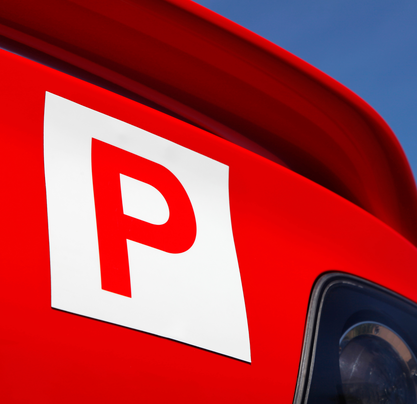
While I felt nervous being a late learner, being over 25 meant I did not need to complete logbook hours in Queensland. It also meant I would advance straight to my Green P’s after passing my driving test. This made the process feel less overwhelming as there was potentially less time needed before I obtained my license.
In 2017, I completed my written road rules test. I passed on my second try and received my learner's licence. I eventually began taking paid driving lessons.
Between 2016 and 2022, I had done countless hours and visited multiple driving schools and instructors. I had dented and scratched my partner's car several times and spent hours in empty car parks practising parking.
I attempted several practical driving tests which were filled with days of anxiety. During this period, the COVID-19 pandemic occurred, alongside several significant life events.
In 2022, after my fifth driving test, I finally obtained my driver’s licence. In total, it took me five years.
Learning what worked for me
I had difficulty finding an instructor whose approach helped me feel safe and comfortable. After seeing me struggle with instructors, my partner offered to help me. This was a turning point for me, as I finally felt truly supported and like learning to drive was achievable.
One of the biggest lessons I learned during this period was how to notice my stress levels and respond to what my body and mind needed. My partner helped me recognise that my emotional state had a huge impact on my ability to drive safely and confidently. This included things like:
- not forcing myself to drive because I ‘needed to practise’
- acknowledging when something does not make sense to me
- calming my body and mind with slow, deep breathing before starting the car
- not stressing about getting to a destination in the ‘best’ or ‘fastest’ way possible
- not worrying about taking a ‘wrong’ turn and taking longer to get somewhere
- rather than trying to become a perfect driver immediately, I focused on discovering what I already understood about driving and what things I may need to have explained differently.
My experience of the driving test
I found the testing process incredibly stressful. During my first test, I was so anxious that I forgot which way to turn the key and start the car. I mixed up everything about showing the instructor how the car worked. I thought they would ask me to get out of the car then and there, but I continued and finished my first test.
It turns out I had failed due to several mistakes. I was devastated. I remember bursting into tears in front of the instructor and then again outside the building. At the time, it felt overwhelming and embarrassing.
Eventually, I found a sense of relief in having failed that first test. The worst-case scenario had happened, and I had still woken up the next day. It became easier to try again because I was no longer carrying the fear of failing or the anxiety of an unfamiliar situation.
Over time, I also realised that driving tests and real-world driving do not always feel the same.
Throughout this period, I relied heavily on support from my partner. They helped me:
- double check test dates and times of the test
- drive me to the test centre
- speak with instructors when I felt too nervous to do it myself
- provide emotional support and a safe space to talk through my thoughts and feelings both before and after the test.
Some of the things I learnt during this period were:
- failing a driving test does not mean I cannot become a safe driver
- feeling nervous does not mean I am incapable
- mistakes are experiences that help me learn, not a personal failing.
When I eventually passed my final test, I was still extremely nervous. I had my driving instructor with me and was driving their car, which I hadn’t done in my previous tests. Before the test, my driving instructor told the examiner that I was very nervous ‘for some reason.’ I appreciated my instructor’s support, but I still wish they had spoken about my anxiety with more understanding.
After the test, the examiner reassured me that I am a capable driver, despite my small mistake of taking a turn too early. It turns out I had passed! Finally! This time I also burst into tears, but from happiness and relief rather than shame and sadness.
Driving today
I have been on my open licence for a few years now and I continue to drive regularly. I have driven in situations I thought were once impossible for me, and I am very proud of my achievements.
I found driving became easier after I got my open license. I found I didn’t have the pressure of being a ‘new driver.’ I do still make mistakes. Everyone does. That’s okay and a reality of driving on the road.
While I enjoy driving, I still use public transport whenever I can. It remains my preferred option, especially when travelling inner city.
Why I enjoy driving
Despite the challenges, there are many things I enjoy about driving:
- It gives me a sense of freedom and independence
- It allows me to explore new places
- It reminds me that I can achieve complex and difficult goals
- It has increased my confidence in other areas of my life
What can make driving more demanding for me
Driving can still require a lot of energy and attention for me. I use various strategies that support my focus, comfort, and safety.
These include:
Navigation and directions
One area I still find difficult is navigation and directions.
I often mix up my left and right. If somebody gives me several directions at once, I can quickly become confused.
What helps me:
- Receiving only one direction at a time
- Using visual navigation instead of spoken instructions
- Using a physical check for left and right, such as squeezing the steering wheel with the hand matching the direction
- Looking at surrounding traffic when I am unsure which side of the road I should enter
- Following familiar routes whenever possible.
Maintaining focus
Driving requires sustained attention, which can be tiring and challenging. I drive best when I feel mentally and physically prepared.
What helps me:
- Taking regular breaks during longer trips
- Sharing driving responsibilities when possible
- Eating and drinking before travelling
- Reducing distractions in the car
- Using navigation so I can focus on driving rather than remembering directions.
Driving at night
I have astigmatism. This means lights often appear blurry, particularly at night or in wet weather. This increases the amount of concentration required and can make driving feel more demanding.
What helps me:
- Sticking to familiar routes when driving at night
- Using navigation even when I know where I am going
- Allowing extra travel time
- Avoiding unnecessary night driving when possible.
Overwhelm
Driving can feel overwhelming because there is so much information to process at once. At times, the amount of visual information, sound, and movement can become overwhelming.
What helps me:
- Planning ahead and giving myself extra time
- Driving familiar routes when possible
- Reducing distractions inside the car
- Depending on the situation: no music whatsoever or playing my favorite songs on repeat
- Taking breaks when needed
- Pulling over safely if I need time to regroup
- Remembering that arriving late is preferable to driving while overwhelmed
- Not attempting turns if I don’t feel I can safety complete them. I will go another direction instead.
- Not feeling pressured by other drivers to rush, especially in heavy traffic.
What I would tell another Autistic driver


1.
Learning to drive is a skill, not a measure of intelligence

2.
Find an instructor or support person you trust

3.
Focus on progress rather than perfection

4.
Remember that confidence develops through practise and experience

5.
Find what works for you, even if it looks different to other people
Final thoughts
Learning to drive is a skill I did not think I could possess. One of the biggest lessons I have learned is that driving became easier when I stopped trying to learn the way other people expected me to and started focusing on what worked for me.
It is reassuring to know that many of my experiences are shared by other Autistic people learning to drive. Research highlights the importance of supportive people, confidence building, and adapting driving instruction to the individual (Bishop et al., 2025).
Whatever you decide about driving, your choice is valid. If you choose to learn, it is okay to move at your own pace. You deserve support that works for you.
References
Bishop, H. J., O'Donald, M., Sartin, E. B., Myers, R. K., Labows, C., Yerys, B. E., & Curry, A. E. (2025). Driving toward independence: Perspectives from autistic adolescents and their families. Journal of Autism and Developmental Disorders.