
 Saved resources
Feeling like you’re always pushing yourself, being hard on yourself, or stuck in self-criticism? You’re not alone. What if you could learn to treat yourself with kindness, understanding, and compassion – especially during hard moments? That’s exactly what ASPAA is all about.

What Is ASPAA?
ASPAA stands for Aspect Self-Compassion Program for Autistic Adults. It’s a program co-produced by the Aspect research team together with Autistic advisors (Aiyah Membery, Anna Gould and Chris Day), led by Dr Ru Ying Cai and Dr Chris Edwards. The goal? To help Autistic adults cultivate more self-compassion – learning to be a better friend to themselves when things are tough.
Attention professionals: Below is a free version designed for Autistic adults that you are welcome to share with the people you support. You may also explore the clinician version for deeper insights or to guide your own learning.

Free version
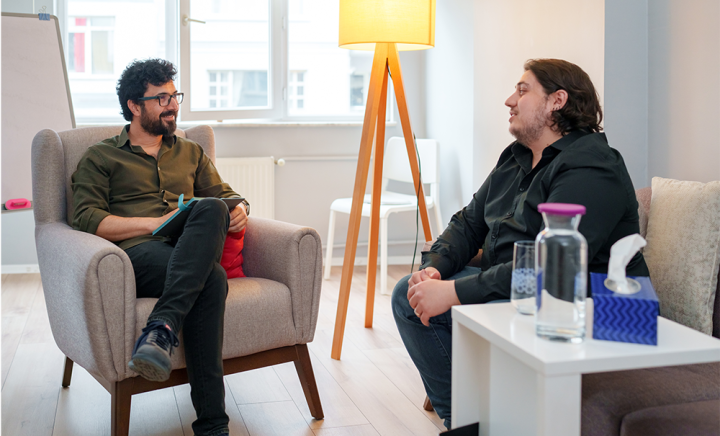
Clinician version
Why self-compassion matters
Self-compassion isn’t just a “nice idea.” Research shows it's a skill that can be developed – an important one for well‐being and mental health. Some of the foundations for ASPAA include:
- The Mindful Self-Compassion program (Neff & Germer, 2018) and Compassion-Focused Therapy (Gilbert, 2010).
- A pilot study involving 39 Autistic adults to test ASPAA’s impact. Results showed improvements in emotion regulation and mental health outcomes.
- A qualitative study exploring lived experiences of using ASPAA – what felt helpful, what was challenging.
Here’s a video of Gene talking about their experiences of using ASPAA:
These findings tell us that ASPAA isn’t just theory – people have used it, reflected on it and found value. If you’ve ever felt overwhelmed, self-critical or isolated, cultivating self-compassion could help shift things in a gentler, more sustainable direction.
What the program looks like
Here’s how ASPAA is structured:
- Introductory module: Sets the stage—what to expect, how to use the program.
- Five main modules, to be done in order:

Module 1
Understanding self-compassion

Module 2
Benefits of self-compassion
Module 3
Mindfulness

Module 4
Finding your compassionate voice
Module 5
Accepting our experiences
You can go through the modules:
- Independently, at your own pace.
- With a trusted person – friend, family or support worker.
- Or with a clinician or mental health professional for added guidance. This is especially important if you experience strong, unpleasant emotions or thoughts when you try self-compassion for the first time. This happens when self-compassion practices bring out hurt from past trauma and experiences.
Who it's for – and who it’s not
ASPAA is meant for Autistic adults who want to build self-compassion and improve emotional well-being. But there are some groups it hasn’t yet been tested with, so caution is advised. It has not been piloted among Autistic people with:
- intellectual disability
- severe trauma background
- psychotic disorders
- recent self-harm ideation or behaviours
- those who have recently stopped or changed therapy or medication.
If any of that applies to you, it might help to check in with a healthcare professional before starting.
How to begin your self-compassion journey
If you’re interested, here’s what to do:
- Register for the free version – provide your name, email (phone number optional). Your info is confidential.
- Complete the Introductory module, then move through the five core modules in order.
- Choose how you want to work through it: by yourself, with someone you trust or with a professional.
Even small steps count. Each module is built to help you notice, practice, and grow kindness toward yourself.