
 Saved resources
Definitions – What's the difference?
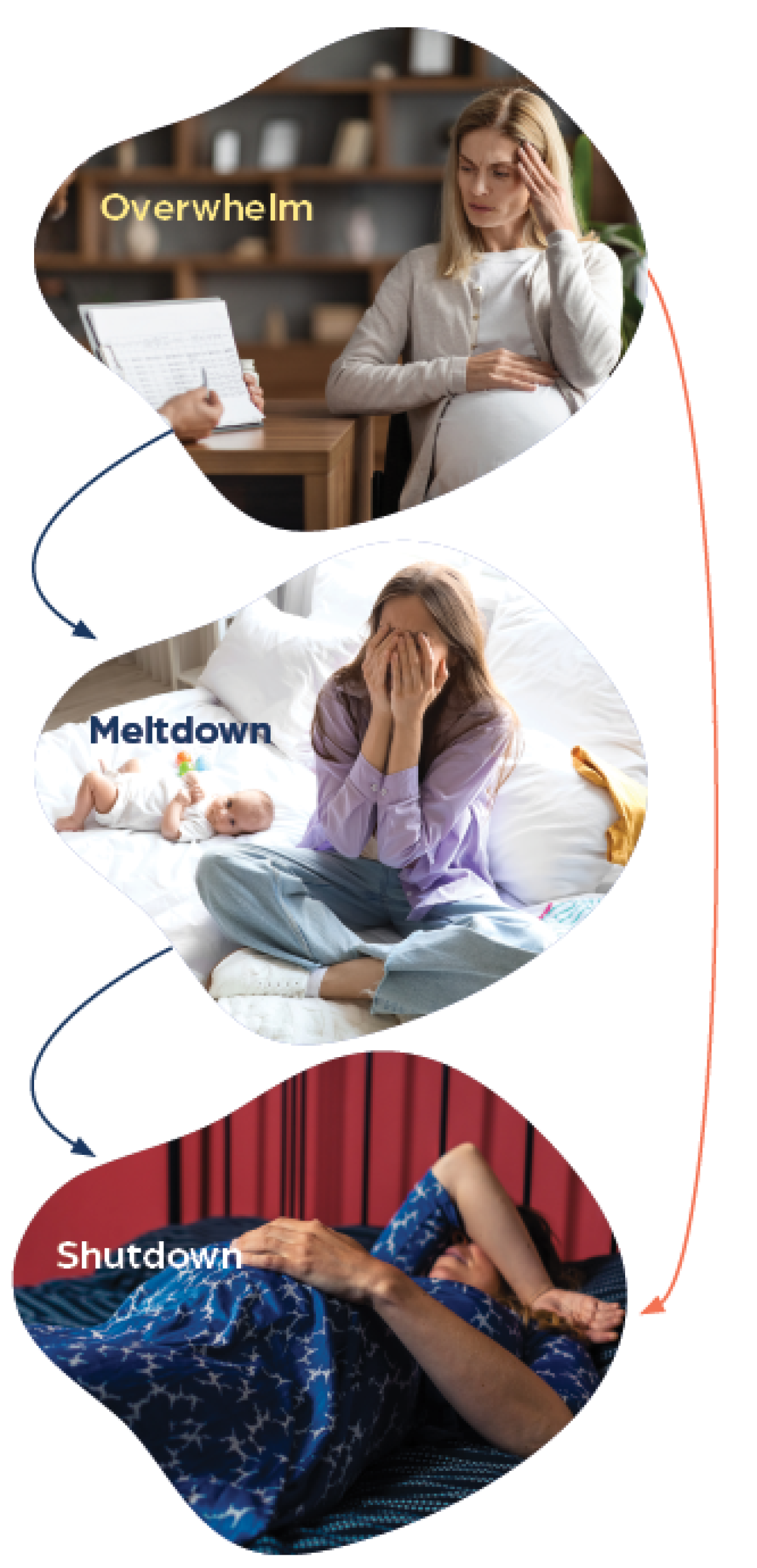
It can be helpful to see a meltdown as an outward response and a shutdown as an inward response to overwhelm. A person’s ability to think, process and make decisions is impacted during a meltdown or shutdown.
Meltdown: “becoming completely overwhelmed by the current situation and expressing this verbally (e.g. shouting, screaming, crying) or physically (e.g. kicking, lashing out, biting)” (Hampton 2024*). Meltdowns can include self-injurious behaviours.
Shutdown: “withdrawing from the world around oneself, for example being unable to communicate, lying down and being completely still and not being able to move” (Hampton 2024*).
*Hampton, S., Allison, C., Baron-Cohen, S., & Holt, R. (2024). Autistic people’s perinatal experiences i: a survey of pregnancy experiences
It is best to talk with an Autistic patient about what a supportive response looks like for them before they experience a meltdown or shutdown while in your care.
- What do you anticipate might trigger a meltdown or a shutdown? Is it:
- pain
- trauma history
- sensory demands
- fear
- uncertainity waiting too long
- too many questions?
- What are some warning signs?
- What strategies might mitigate those potential triggers?
- What does a meltdown look like for you?
- What does a shutdown look like for you?
- Who do you trust to make decisions for you if you are unable to?
- What is your preferred communication method if we need to ask you something during and after a meltdown or shutdown?
- Are there any particular activities, interests, or objects that you find soothing after experiencing a meltdown or shutdown? How could we support you to access those things?
Clinical response to a meltdown or shutdown based on neuro-affirming perinatal care
1. Remove sensory input and demands as much as possible
- Take everything out of the situation (lights, sounds, questions) *extinguish everything*
- Reduce interactions with the individual
- Avoid physical contact
- Remove people in the room who are not necessary (except for a trusted clinician or support person)
- For the people staying in the room, move yourself and any objects (e.g., machines) in a calm manner, without rushing or using sudden movements
2. Reassure the individual
- Keep calm
- Acknowledge the response – validation can help the individual feel seen and supported
3. Communicate clearly
- Allow extra processing time
- Use direct language (avoid fluffy language)
- Offer written instructions or visual instructions incase verbal communication is not effective
- Communicate with compassion
- Avoid unnecessary communication and questions
4. Reduced threshold for further disruption
Understand that an individual’s threshold for further disruptions may be lowered after a meltdown or shutdown.
5. Allow support person's involvement
If someone has a support person, allow their support person to guide the response to sensory input and demands as much as possible.
Debrief and document
After, take time to debrief with the individual (when they are ready) and any involved support people. Ask what felt helpful or unhelpful from their perspective. Remove their shame by using affirming language. Then, document those insights clearly and respectfully in the person’s file or care plan. This creates a record that helps other clinicians understand what works, what to avoid, and how to support the person more effectively in the future. Self-injury may have occurred during the meltdown. If this is the case, discuss referral to other services during the debrief.